
Don't just say "pitiful" – the mirror of Nepal reflects the invisible cage within ourselves

Poverty, religion, caste, and views on life and death. In Nepal, "different logics" that one wouldn't seek out in Japan's homogenous environment exist as everyday reality. This isn't merely the "state of a developing country." Rather, it's a mirror that confronts you with the fact that the very premises you believe to be "obvious" are, in reality, only established under quite specific conditions.
How can "knowing" become a device for broadening one's perspective? And how is the act of "helping" merely a projection of one's own standards? Using the concrete realities of Nepal as a guide, I want to explore this structure.
- The flip side of the story of underdeveloped countries
- A thought apparatus that gives meaning to suffering—the interpretation of karma
- Questioning the very viewpoint of "I will help you"
- Funeral Rites: The Choice Not to Linger
- Why do you keep breaking out of the box?
- A change in perspective isn't about becoming gentle.
- [Upcoming maaaru Donation Tours]
- Not wishing for world peace, but increasing practitioners who implement it: What lies between prayer and implementation
- Afghanistan Stay Journal Day 1: Hotels, Food, and Safety
- Now that AI is destroying the ecosystem, where do we stand? Vapors are being born in order.
The flip side of the story of underdeveloped countries
Nepal is a landlocked country sandwiched between the two great powers of India and China. Originally, there was a mountain culture in which the concept of economic development itself was weak, and tourism barely supported the market. In addition to that, the caste system, which still remains strong, dictates the very structure of society.
Access to education remains divided by caste and economic status. Children of the wealthy attend private schools where they learn English, which they then use as leverage to go abroad and earn foreign currency, for example, in the Middle East. Meanwhile, children from impoverished backgrounds do not even have the opportunity to learn English, remain confined to their home country with no jobs, and poverty is reproduced. Before individual effort can even come into play, one's path is largely determined at the moment of birth, dictating which story they will live.
It's easy to consume this situation as "a story of a pathetic country." But what we should really be asking is what comes before that. Is the premise that effort leads to success actually a narrative that only holds true in a rather special environment?
A thought apparatus that gives meaning to suffering—the interpretation of karma
In this region, based on Hinduism and Buddhism, the concepts of reincarnation and karma permeate every aspect of life. Being born with a disability or losing a part of one's body in an accident are often interpreted as "the result of actions in a past life."
This interpretation dictates not only the individual's attitude but also the attitudes of those around them. Families with a child with a disability first suffer an economic blow as they lose a breadwinner, to which is added a religious interpretation of "it cannot be helped because it is a result of karma." In some cases, even becoming a victim of human trafficking is described as a process of resolving karma. If that is the case, the logic easily follows that the act of "rescuing" the victim could even be an act that hinders their karma resolution.
In Japan, situations start from the premise of "everyone is equal," but in other cultures, society is built from entirely different starting points. Before rushing to judgment about what is good or bad, the fact itself that we should recognize is that "stories that give meaning to suffering" can take completely different forms in each culture.
Questioning the very viewpoint of "I will help you"
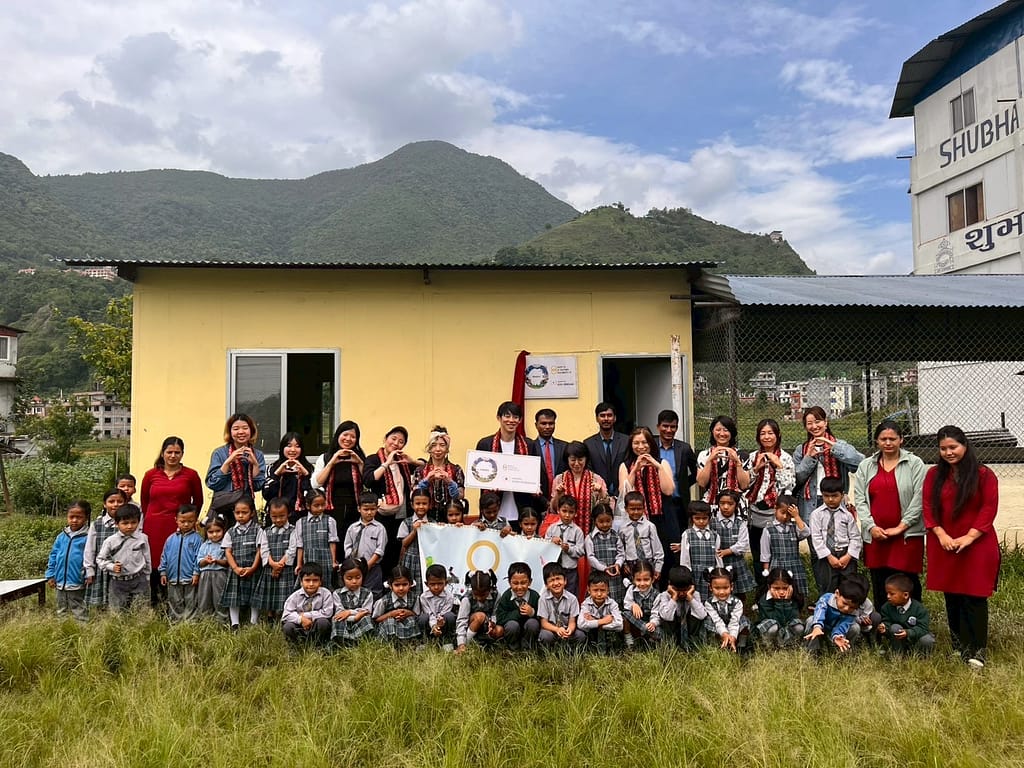
The roof of the cafeteria in a certain support school is covered with countless small holes, and it floods every time it rains. It's the kind of thinking for outsiders like us to worry about how much it will cost to repair. No one there is trying to fix it. It's not a large-scale construction project, and there's no shortage of manpower, yet it's being neglected. Rather than laziness, it's as if they are living with a priority of "rain doesn't matter," or perhaps there's some other reason.
What is at issue here is not so much a difference in priorities as a difference in the very yardstick used to define what constitutes a problem. Is it truly beneficial to build toilets? Might building handwashing stations inadvertently instill unnecessary habits? Aid can often become an act of unconsciously imposing the values of the giver.
Funeral Rites: The Choice Not to Linger
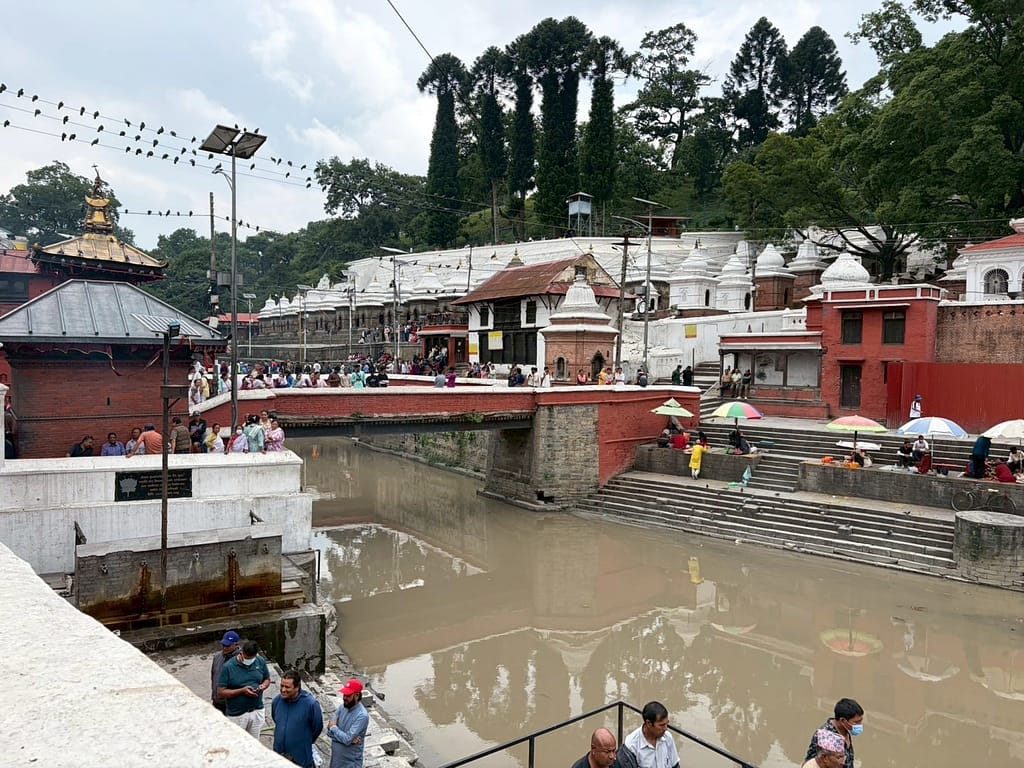
At Pashupatinath Temple, when a family member dies, they are cremated on the riverbank the next day and then flowed into the river. There are no graves. This is because, with the premise of reincarnation, there is no reason to cling to the physical body itself. While the bereaved family weeps, for the many tourists and onlookers gathered there, death forms a "tourist-like spectacle" where people gather on a Sunday.
This culture, which clearly has a different sense of time compared to Japanese funeral customs—where grief is carried for a long time and runs deep—is not about being “heartless.” It simply means that the very way grief is expressed and the relationship with the deceased are structured entirely differently based on the living’s philosophical framework.
Why do you keep breaking out of the box?
The village chief's principle of action is this: they have a nature that makes them easily drawn to many things and believe they have too many things they want to do. They can pathologically continue to believe they can do anything—even if it's a misunderstanding, the very ability to continue believing that is their characteristic. And the bigger the things they think about, the more their abilities are unleashed.
However, this isn’t to say, “So everyone should do the same.” Not everyone possesses the same qualities. What’s being called into question is the realization that, as long as we remain within our own mental frameworks, we’re bound to repeat the same patterns of thought and arrive at the same conclusions. That’s precisely why we must deliberately set out to break those frameworks.By going to the location in person, we seek to shake up the very premise—which has become fixed in our daily lives—that “I was born in this era as a Japanese person.”
Even though I travel abroad every month, I still feel a bit of tension at foreign airports. Not getting used to it, maintaining that sense of discomfort as discomfort – that is precisely the technique to avoid fixing one's perspective.
A change in perspective isn't about becoming gentle.
The reality of Nepal forces us to confront the fact that this is not simply a matter of “learning about a pitiful country to become more compassionate.” Rather, the opposite is true.We are forced to confront the fact that the assumptions we believe to be true—that hard work pays off, that equality is a given, and that aid is a good thing—are, in reality, nothing more than local narratives that hold true only under extremely limited conditions.
There is a decisive difference in the amount of information between simply knowing, as a matter of fact, that “there are countries like that” and actually experiencing it firsthand amid the local smells, the heat, and the stares of others. That is precisely why the reality of a distant country can serve as a catalyst for reshaping one’s very perspective.
Realizing just how narrow your own perspective has been. This isn’t a matter of the absolute quantity or quality of knowledge; rather, it’s the experience of stepping back to reexamine the very structure of your thinking from a broader perspective. And that experience doesn’t have to be triggered solely by traveling to a distant country.You can reach the same place simply by training yourself to consciously question the “norms” that have become ingrained within you.
However, in terms of sheer volume of information, there is no better method than to be there in person. No matter how detailed the description in a text may be, the smells, the heat, the atmosphere of a family tearfully seeing someone off right before your eyes – these things cannot be conveyed unless you are standing there. If you are serious about shaking up your own perspective, then you have the option of going to that place yourself, on your own two feet.
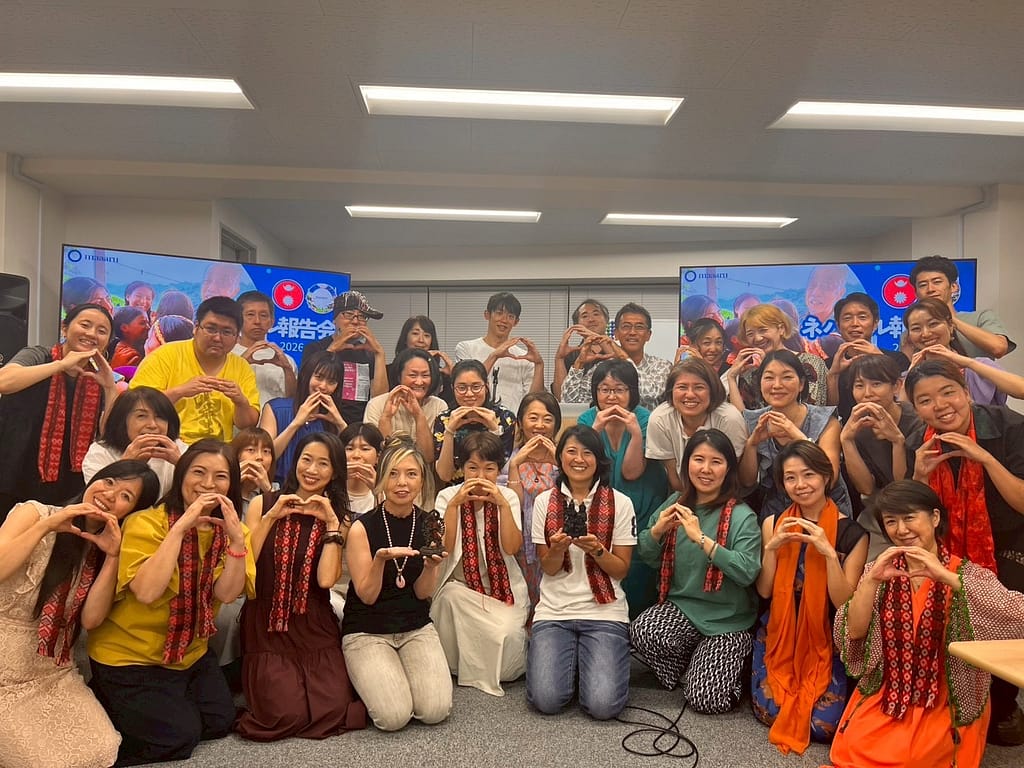
[Upcoming maaaru Donation Tours]
On each tour,
Experience local social issues and culture firsthand.
Exchange with supported organizations and support groups
Installing the "See the World Through Structure" Perspective
Through these and other experiences, we offer “tours that change the way you engage with the world”—tours that go beyond mere sightseeing.
▼Sri Lanka Tour in September
We were affected by flooding last November, and as 1/100maaaru, we delivered the support we received from all of you,
I will visit Ruchila's kindergarten in a poverty-stricken area.
Attending ceremonies, making Sri Lankan curry, visiting World Heritage cities, and
This tour is packed with activities, including a charity haircut by one of our supporters who is also a hairstylist.
Dates: September 8–13
https://hayashi-travel.com/tours/08sep2026/
▼October Tour: Guided Tour of the Philippines with Q-TA
We are holding a tour with guest artist Q-TA, the collage artist who also designed the maaaru logo!
Dates: October 21–26
Please stay tuned for updates on the official maaaru LINE account.
https://lin.ee/856UDOC
▼Cambodia Tour in November in Collaboration with the NPO JOY Kids’ Theater
This is a collaborative project with JOY Kids’ Theater, which provides musical theater education.
Dates: November 3–8
Please stay tuned for updates on the official maaaru LINE account.
https://lin.ee/856UDOC
↓Related articles are here↓
↓Latest posts are here↓
-

Not wishing for world peace, but increasing practitioners who implement it: What lies between prayer and implementation
Wishes do not change their structure even if the total amount increases. Even if the number of people wishing for peace doubles, the distribution of resources remains unchanged. Wishes are completed within the individual...
-

Afghanistan Stay Journal Day 1: Hotels, Food, and Safety
I am in Afghanistan. Japan still designates it as a travel-ban area, so the hurdles are quite high, but...
-

Now that AI is destroying the ecosystem, where do we stand? Vapors are being born in order.
The list of "jobs that will disappear" is useless. Job titles are merely loose bundles of work content. What actually disappears are the jobs...