

Deciding what to do now based on 2050—What will it look like in the timeline?

- The area has a time axis.
- ── Why can people only see so much of it?
- If we set the standard in 2050, today will change.
- — Without setting a standard, it’s impossible to decide beforehand.
- The speed is increasing every year.
- — in the stages of life
- For Those Who Want to Learn More
- The age of AI where the importance of momentum is increasing—After the gap in intelligence is eliminated by AI, what remains in the end
- How to turn the benefits of ecosystems destroyed by AI to the side of those who benefit from them—and how to leave the other half behind
- The era in which AI will make individuals the most powerful—the reason we stopped looking for abilities that can't be matched by AI
- Frequently Asked Questions
People live by reference to various future scenarios. Some have goals for themselves in five years, while others may be calculating backward from 20 years from now. Some live by their children’s growth, while others live by their promotion at work, retirement, starting a business, or buyout.
The age at which goals are set is based on individual values, but the important thing is that when we look at things in a time perspective, the question arises: "So, what should we do today?"
To decide on my future actions, I want to know information about the future. Many people use this as a motivation to select various information.
In this case, instead of focusing on the long-term perspective, we will deepen it as a structure of judgment.
The area has a time axis.
When it comes to expanding one's own field, we usually talk about the field itself—the industry, the specialty, the title.
This time, let’s expand a little from there and take it into the realm of timeframes. That is the extent to which we treat what happens years from now as our own problem. And then there’s the human dimension. It’s not a question of job title; it’s the extent to which we interact with people on a daily basis, in the sense of what level of person we are interacting with.
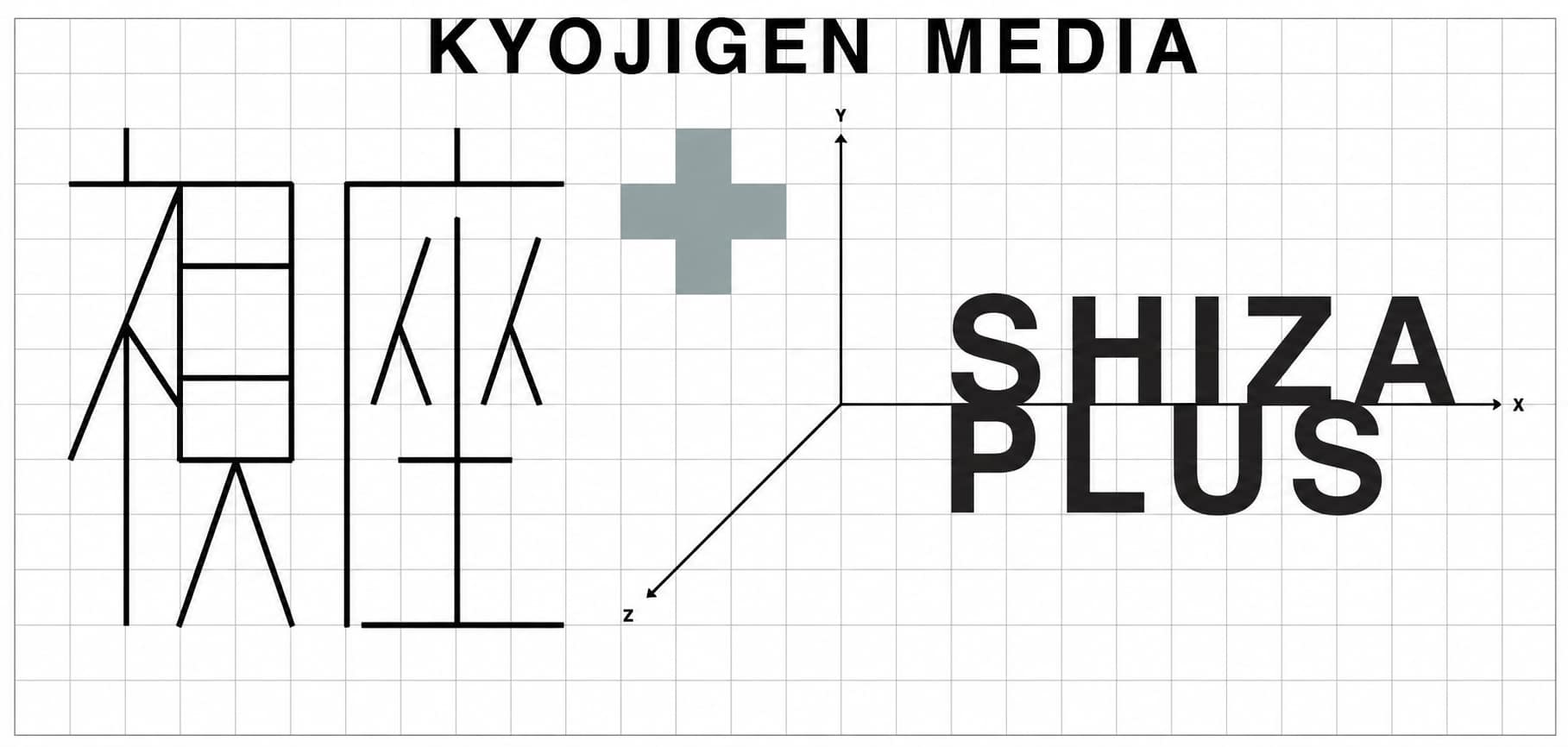
When viewed as coordinates, these can be grouped into a single structure. The axis of the viewpoint has a starting point, and from that point multiple axes extend out, with the range of their reach constituting the range of sight. The field of view is only one dimension of the range; time and people are also considered dimensions of the range.
The problem is that many of these coordinates were actually formed without much thought. The timeline that only covers next month’s deadline and this fiscal year’s figures was not chosen by the person in charge; it just happened that way.
── Why are people only able to see so much of it?
Action economics has a term called “bimodal discounting.” It refers to the tendency of people to underestimate the value of things in the distant future disproportionately compared to the value of things in the near future.
In other words, if left unchecked, judgment will be drawn to the front. Therefore, placing the standard at a distance is not a matter of character; it is a natural phenomenon that will naturally flow towards it if it is not intentionally designed.
If we set the standard in 2050, today will change.
If we set the bar at 2050, what we do today will change. The same is true for 2035. Where we set the bar determines all the judgments we make before that point.
The method of setting a future goal in advance and then drawing a path backward from there is called backcasting (reverse thinking). This approach, which originated from energy policy research in the 1970s and 80s, is juxtaposed with forwardcasting, which draws a future line extending from the present.
What the village chief has been consistently advocating is a sequence that takes this one step further. The future does not come later as a result of present events; rather, there is a starting point on the future side, and the present determines the future. It is a matter of reversing the direction of time based on judgment.
── Without setting a standard, it's impossible to decide on the front end either.
Conversely, in a state of no standards, the decision on what to do next cannot be made either. Without a decision, we will continue to choose based on our current mood or the wishes of others. This may seem like freedom, but in reality it is the most restrictive way of living.
The speed is increasing every year.
In 2026, we are just three months away from the end of the year. You might feel that it’s almost over.
And next year will end at a speed that exceeds this. According to the “Janne’s Law” advocated by the 19th-century French philosopher Paul Janne, the subjective length of a year tends to be shorter in proportion to age. A decade is a quarter of a life for a ten-year-old, but only a fifth of a life for a fifty-year-old. This coincides with the acceleration of changes in the world itself. Acceleration of perception and acceleration of the environment. Any plan formulated without taking these two premises into account will inevitably deviate from reality.
2050 seems like a distant future, but in reality it will arrive much sooner than we imagine. At least, it will arrive much sooner than the experience of living in the past 25 years. Placing a standard far in the future is not a virtue; rather, it is a manifestation of a sense of inadequacy with time.
── In the stages of life
Whether to get married, divorce, quit your job, or start a business—life has many different situations. In each of these, what is needed is not the answer itself but the guiding principle that underlies the decision. And that guiding principle changes depending on which time frame is taken into account. It is not uncommon to see that the correct choice from three years ago is clearly mistaken from twenty years later.
First, I want you to determine where you are based on the current standard. That year will guide your decisions today.
For Those Who Want to Learn More
The “range” discussed in this article is the central concept of the paper, which takes the perspective as the origin, axis, and coordinate of the range. The direction of time, which places the origin on the future side, is discussed in more depth in the “virtual time” paper.
"Coordinate structure theory of perspective view" (Paper 7) by Murashu Yu-chan (i.Institute)
"False Time" (Paper 5) by Murashino Yu-ma (i.Institute)
"Will" — Ongoing events through December
From what we can see now, to future plans, and to the core of decisions that we usually don’t talk about.
Everything that can be spit out will be spit out. The first and final episodes will be held in real life.
↓For more information about "Will" and how to apply, click here↓

↓Related articles are here↓
↓ Latest articles are here ↓
-
The age of AI where the importance of momentum is increasing—After the gap in intelligence is eliminated by AI, what remains in the end
This article examines what makes the difference in the AI era. In conclusion, it is said that "the part of the brain that is responsible for thinking and creating ideas..."
-

How to turn the benefits of ecosystems destroyed by AI to the side of those who benefit from them—and how to leave the other half behind
It is believed that businesses should start with what they want to do. However, the advent of AI is bringing a new wave to that. Sales…
-

The era in which AI will make individuals the most powerful—the reason we stopped looking for abilities that can't be matched by AI
Creating apps that only you use every day—replacing search or updating a handy tool for when you’re stuck—in an instant, now with AI…
Frequently Asked Questions
This is because there is a tendency to undervalue the value of the distant future disproportionately more than the near future—a phenomenon known as “bimodal discounting.” As long as we don’t intentionally set the standard too far in the future, our judgment naturally gravitates toward the immediate future.
This is a way of determining the future’s destination in advance and then drawing a path backward from there to the present. It is the opposite of the forecasting method of drawing a future within the current framework.
Because everything that precedes it is determined by where the standard is placed, the time it takes to perceive things is getting faster every year. Therefore, placing the standard at a distance is not a sign of longevity; it is also a manifestation of the realization that there is not enough time.


