


Rescuing Children from Sexual Exploitation: Challenging the Structure of Modern Slavery

- FinLi — Thoughts on the figure "50 million" from a project perspective
- a feeling of powerlessness and anger—two emotions that become driving forces
- Visualize the invisible chains.
- Not out of goodwill or anger—"design" breaks structure
- Do you stand on the side of cutting ties?
- Your choice will decide the future of 50 million people.
- Increasing the granularity of memory settings — for those who are concerned about the finer details, here’s why changing the focus can reveal the big picture
- The difference between growth and evolution: Feeling joy in growth means closing off possibilities
- If you want to win, first you have to lose—The reason why people who know how to lose always win in the end, and the boundary between "a habit of losing" and "winning"
- Frequently Asked Questions
FinLi — Thoughts on the figure "50 million" from a project perspective
a feeling of powerlessness and anger—two emotions that become driving forces
50 million people.
The number of children who are victims of sexual exploitation in the form of modern slavery. Faced with this number, I have two emotions simultaneously.
One is helplessness. What can one project do for 50 million people? It's too small a light against too great a darkness.
Another is anger. We are tolerating a world where 50 million people are treated as the worst "commodity" of modern slavery. It's not that we don't know. We don't try to know. And what do we do after we know?
This anger keeps FinLi going.

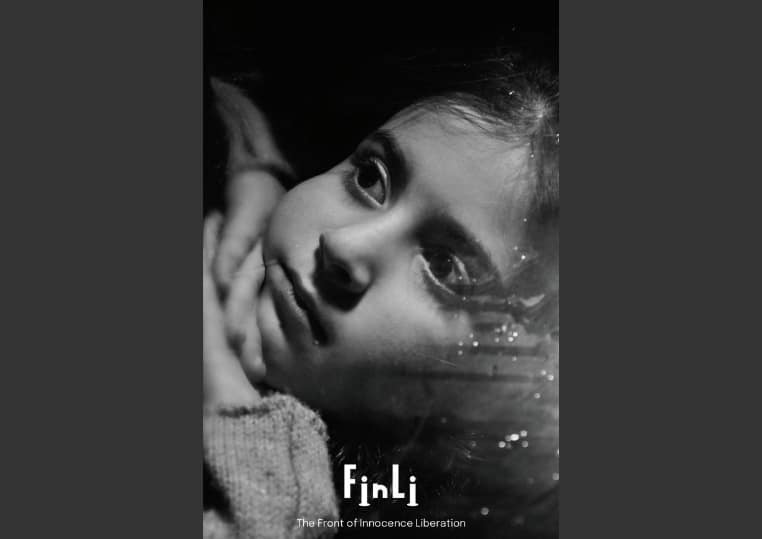
(Image is for illustrative purposes only)
Visualize the invisible chains.
Not out of goodwill or anger—"design" breaks structure
Human trafficking is not a "special crime."
In urban areas, staffing agencies and recruitment firms operate as commonplace systems. This structure, which allows people to treat other people as "commodities," has taken root in all aspects of society.
What FinLi is trying to do is to visualize its structure, design intervention points, and continuously dismantle it.
Even for seemingly peculiar crimes like sexual slavery, various value chains are formed. They are structured similarly to ordinary goods, involving procurement, shipment, distribution, marketing, sales, and customer management. Therefore, destroying even one part will cause the series of activities to self-regenerate and restart.
Good intentions alone won't change structures. Anger alone won't change them either. What's needed is the will to transform good intentions and anger into "design."
Do you stand on the side of cutting ties?
Your choice will decide the future of 50 million people.
When you learn of the existence of "invisible chains," and of the children bound by those invisible yet powerful chains, will you choose to ignore it, or will you stand on the side of breaking them?
That choice will decide the future of 50 million modern slaves, including children.
Please lend me your strength.
↓ Click the banner below now for more details on the FinLi Project to liberate from sexual slavery and modern sexual exploitation. ↓
Part 1 is here
↓ Latest articles are here ↓
-

Increasing the granularity of memory settings — for those who are concerned about the finer details, here’s why changing the focus can reveal the big picture
I worry about paying 10 yen per item. That in itself isn't bad. However, humans have a focus, and when you direct your attention to fine details, the big picture emerges...
-

The difference between growth and evolution: Feeling joy in growth means closing off possibilities
Growth and evolution are not the same thing. However, how do you generally use this term? Growth refers to the process of developing from a simple organism to a more complex one.
-

If you want to win, first you have to lose—The reason why people who know how to lose always win in the end, and the boundary between "a habit of losing" and "winning"
People who keep winning won't be able to move on after one day. People who have never lost are probably just playing only winning games...


Frequently Asked Questions
This project visualizes the structure of human trafficking and designs intervention points to help children recover from the modern slavery state, including sexual exploitation.
Since everything from procurement to sales operates within the same value chain as regular products, even if one part of the process breaks down, the flow will resume.
While this is an important driving force, it alone will not change the structure. It requires the will to transform good intentions and anger into design.


