The moment you name something, it becomes something else—a label is not an explanation, but a fixing of the field of view.
- Have you ever said with absolute certainty, "That person is like this"?
- Labels are not conclusions. They are filters for future observation.
- Putting it into words means cutting down.
- There is always a gap left between the name and the target.
- The problem is not that there is a gap
- The labels we give ourselves have the most powerful effect.
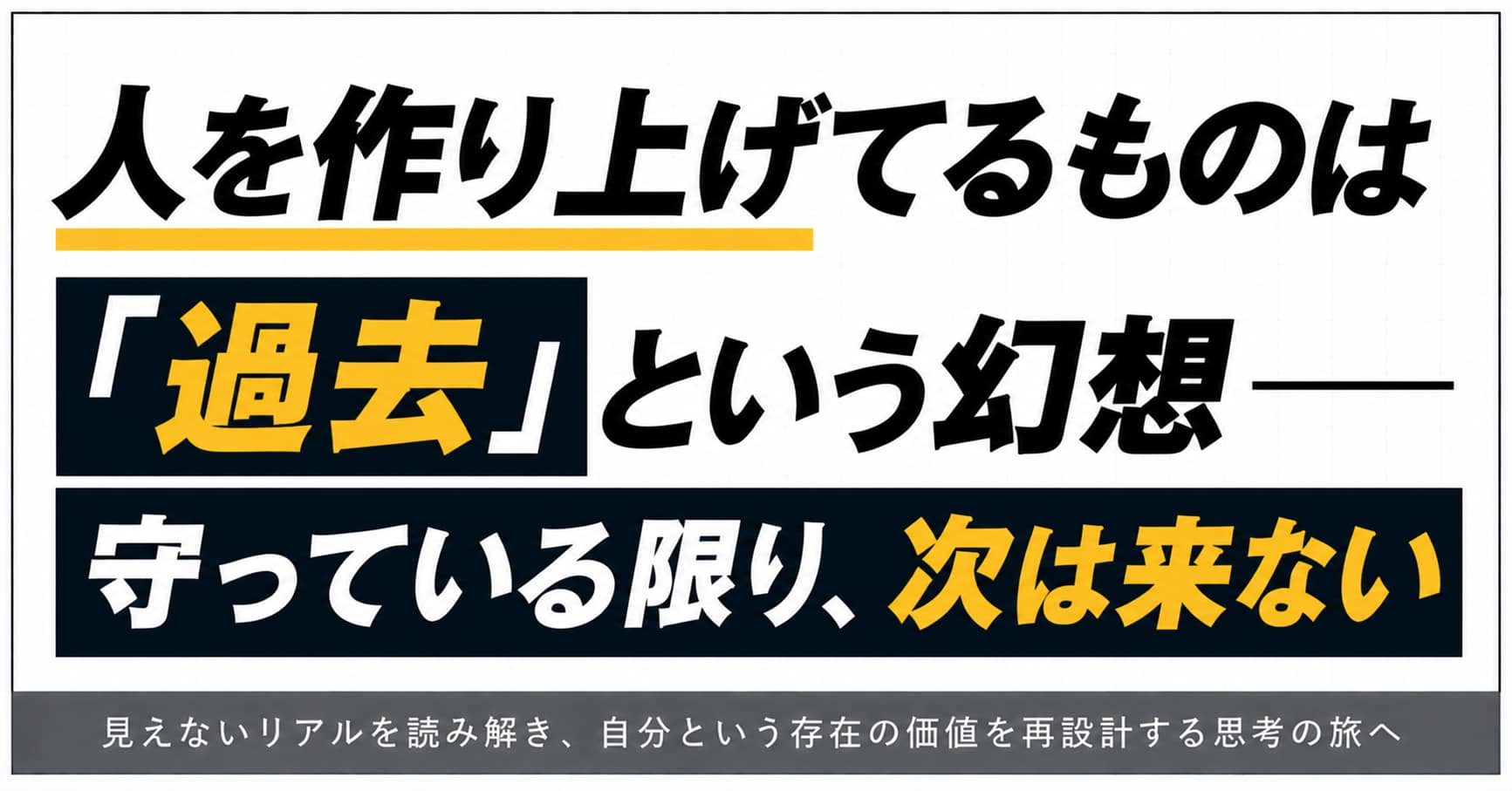
- What creates people is the illusion of a "past"—as long as we protect it, the next one won't come.
- Nothing is greater than your own capacity—no one, no information, no money, everything is determined by the limits of your tolerance.
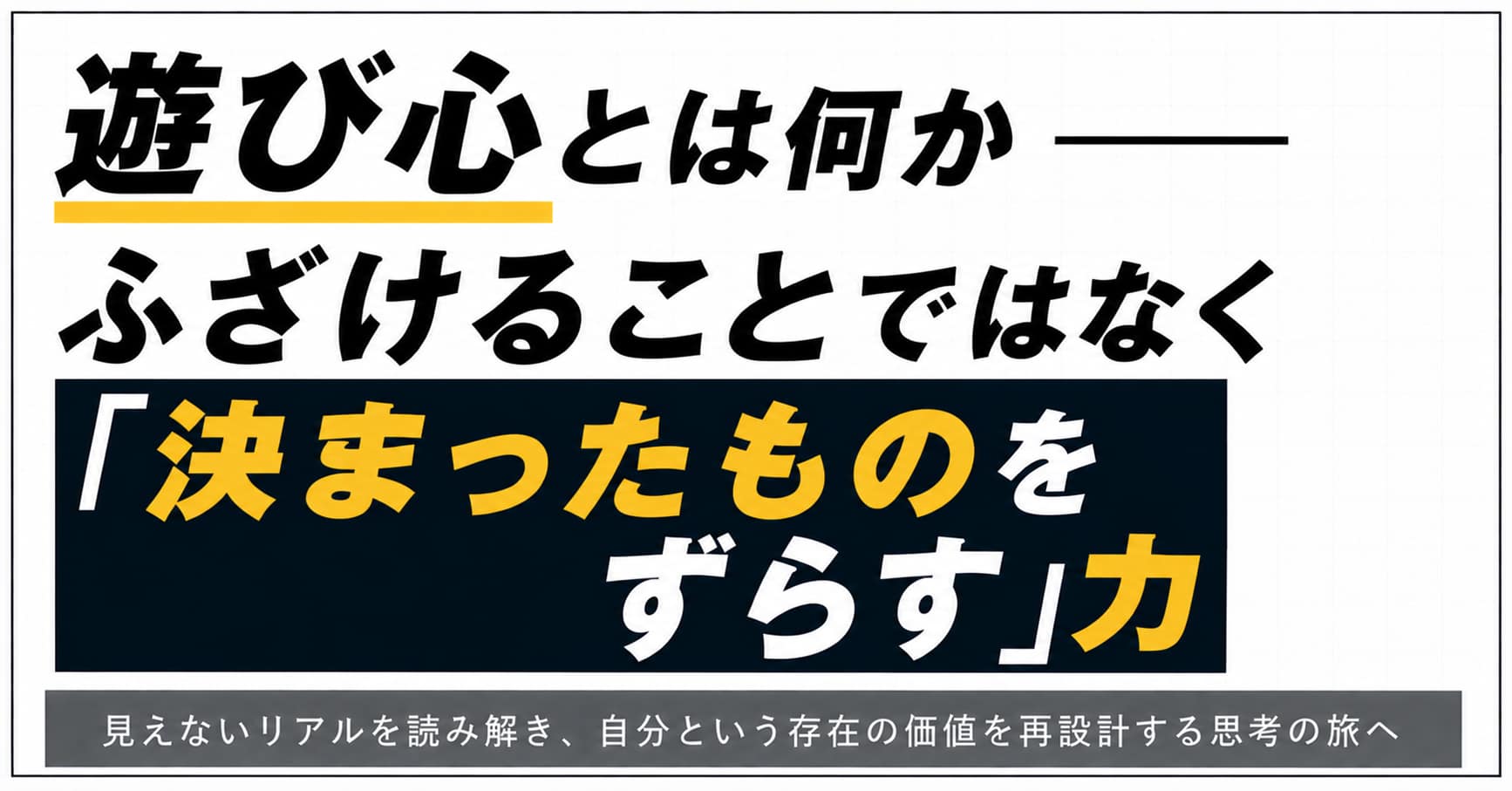
- What is playfulness? It is not about messing around, but the power to "shift the established."
Have you ever said with absolute certainty, "That person is like this"?
Many times a day, people give names to someone. That person is a self-preserver. That guy is all talk. My boss only looks at numbers. I am socially awkward.
Naming is spoken aloud as proof of understanding the other person. It is meant to be a conclusion that can only be stated because they have been watched for a long time. But in reality, it is the reverse. The moment a name is given, the observation itself has ended.
Once you label someone as "self-serving," starting the very next week everything they say begins to sound like self-preservation. Phrasing that once looked like caution now looks like nothing more than self-defense. The other person hasn't changed at all. The only thing that has changed is that one more frame has been added to your field of vision.
Labels are not conclusions. They are filters for future observation.
Naming is thought to be the process of copying the characteristics of a target. But the operation works in the reverse direction. From the moment a name is given, only information that fits that name catches the eye, and information that does not fit is processed as noise.
In other words, a label is not an answer about the subject. It is a mold for continuing to produce answers.
Putting it into words means cutting down.
In the first place, the act of putting things into words is compression. One selects a portion of the vast amount of information right in front of them, replaces it with common symbols, and hands it over to the other person. The other person unpacks it on their end, connects it with the information they possess, and understands it.
Words do not carry information. They merely hand over the key for reconstruction. The key is not the original building itself.
There is always a gap left between the name and the target.
No matter how precisely words are chosen, naming and the object never match. Even with the word red, there is no guarantee that two people are seeing the same red. The word justice, though it appears to be shared, actually takes a different shape inside each person.
This minute and unbridgeable gap cannot be erased. What humans can handle is always approximation, not coincidence. Expression is an asymptotic movement striving to approach infinitely, not an arrival.
The problem is not that there is a gap
I want to flip this here. The incompleteness of naming is not a flaw in itself. Rather, it is the very reason humans continue to think. In a world where things fit together perfectly, there would be no need to think about anything anymore.
The problem is not that there are gaps, but that we forget the existence of the gaps.
When I said, "That person is a self-preservationist," those words were offered as an approximate solution. Nevertheless, the moment they were spoken, they began to be treated as the subject itself. The approximation slipped into a definitive assertion.
The labels we give ourselves have the most powerful effect.
This effect works most strongly on oneself rather than others.
The phrase "I'm shy" is uttered as an explanation of one's nature. But functionally, it is not an explanation. It is closer to an order. From then on, whenever nervousness is felt in a first meeting, that feeling is entirely absorbed into "after all, it's because I'm shy." The work of searching for other reasons for the nervousness is cut short right there.
The labels you apply to explain things end up preemptively sorting all subsequent observations. That is why self-analysis doesn't necessarily make you freer the deeper you go into it; the more divisions you create, the harder it becomes to see outside of them.
There is no need to stop giving names. People cannot deal with the world without words, and cannot think without dividing things up.
You only need to remember one thing. The name you just spoke and what it referred to are two different things.
When you feel you have summed someone up in a single word, there is always something that spills out from that word. And in that leftover space, the person still remains.
↓ Check out the Theta Corridor right now to learn more ↓
↓Related articles are here↓
↓ Latest articles are here ↓
-

What creates people is the illusion of a "past"—as long as we protect it, the next one won't come.
People are made up of what they have built up through their lives. They must cherish and protect what they have built, rise from failure, and continue to waver between regret and hope...
-
Nothing is greater than your own capacity—no one, no information, no money, everything is determined by the limits of your tolerance.
No good news comes. There are times when I feel that I haven't been lucky. But it's not that I haven't received it; it's just that I haven't been able to receive it...
-

What is playfulness? It is not about messing around, but the power to "shift the established."
Don't be fooled by the idea that "playfulness equals fooling around." First and foremost, playfulness is not just about messing around and being lazy...