
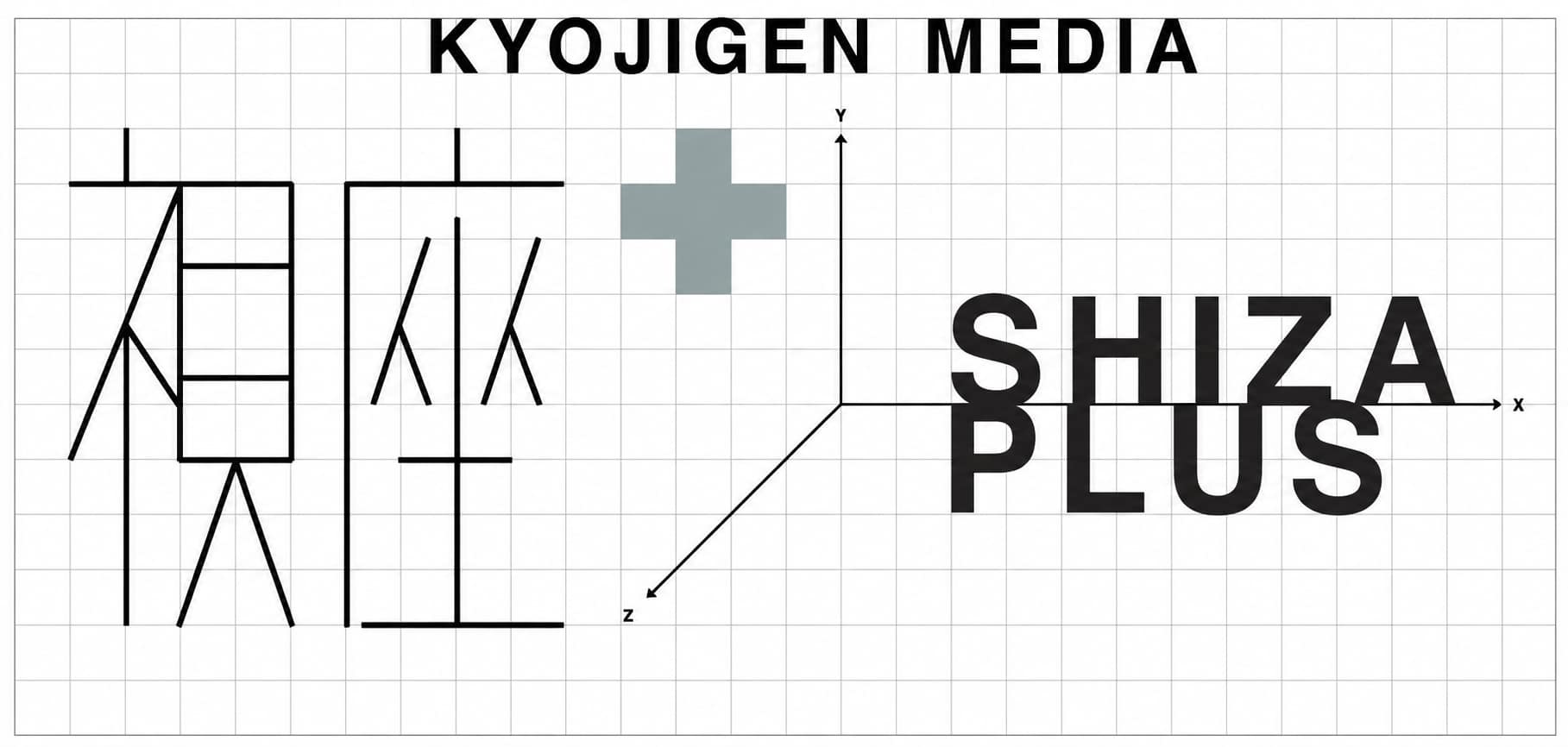
What's the difference between evolution and growth? Evolution is when the “coordinate axes themselves are reconfigured,” while growth is “extending along the axes.”

──A discussion of structures you should know to avoid being deceived by pseudo-evolution
Recently, I've often seen people saying, "I want to evolve" or "I have to evolve."
It's like saying "Growth isn't enough, it has to be evolution." But hardly anyone can explain the difference between evolution and growth structurally. When words are used with ambiguous definitions, the sense of presence in language degrades, weakening their influence on reality. Therefore, let's draw a line here. Evolution is breaking continuity with the past, where one's definition of self and structure of existence are reconfigured by a "different principle." Growth is a step before that.
- ──A discussion of structures you should know to avoid being deceived by pseudo-evolution
- Growth is a “transition within a coordinate system.”
- Evolution is like “exchanging the map itself.”
- “Don't be fooled by ”false evolution."
- The age of AI where the importance of momentum is increasing—After the gap in intelligence is eliminated by AI, what remains in the end
- How to turn the benefits of ecosystems destroyed by AI to the side of those who benefit from them—and how to leave the other half behind
- The era in which AI will make individuals the most powerful—the reason we stopped looking for abilities that can't be matched by AI
- Frequently Asked Questions
Growth is a “transition within a coordinate system.”
Growth is self-affirmation within continuity. Whether it's growing quantitatively, improving qualitatively, or increasing in resolution, the coordinate axis itself on which you stand is not moving.
Metaphorically speaking, growth is like a tree growing taller, similar to leveling up in a game. The game itself hasn't changed. Most of what is called "growth"—social success, academic achievements, numbers, praise—focuses on changes that are visible externally. In other words, growth is the process of increasing resolution and expanding territory on the map of life. This in itself is wonderful. However, it's dangerous to speak of it using the same word as evolution.
Evolution is like “exchanging the map itself.”
Evolution is "self-negation beyond discontinuity." It's a change that reconfigures the very structure of consciousness. Metaphorically, it's akin to a caterpillar becoming a butterfly. At its core, it's a redesign of self-existence, and there's always a moment where continuity with the past is broken.
And evolution is not an expansion of order, but an affirmation of deviation. It is more of an error and a chance than intentional, and also an integral of unintentional choices. That is why people fear evolution. The loss of identity, the anxiety of the unknown, the feeling that Maslow's safety needs are threatened—this strikes with a structure almost akin to the fear of death. The difference between evolution and growth is, in other words, the difference between moving within one coordinate axis and having the entire coordinate axis rearranged.
“Don't be fooled by ”pseudo-evolution."
This is the main point. There are many "false evolutions" in the world that are called evolution but are actually just growth or environmental changes.
Job change, false evolution. Staying in sales at a different company, whether it's a career advancement or a new challenge, isn't evolution because the coordinate axis hasn't changed.
Self-help false evolution. Misconception that buying a single information product will change your worldview.
Spiritual pseudo-evolution. I realized cosmic love and became quantumly happy—in a sense, it has a structure close to evolution, but whether it reaches a restructuring of self-definition is another question.
The key is perspective. Are you moving on the coordinate axes, or are the coordinate axes themselves being rewritten? Only by continuously questioning this can we truly reach evolution. Growth is wonderful. But let's stop calling it evolution.
More details in this video.
What's the difference between growth and evolution [modern evolutionary theory]?
↓Related articles are here↓
↓ Latest articles are here ↓
-
The age of AI where the importance of momentum is increasing—After the gap in intelligence is eliminated by AI, what remains in the end
This article examines what makes the difference in the AI era. In conclusion, it is said that "the part of the brain that is responsible for thinking and creating ideas..."
-

How to turn the benefits of ecosystems destroyed by AI to the side of those who benefit from them—and how to leave the other half behind
It is believed that businesses should start with what they want to do. However, the advent of AI is bringing a new wave to that. Sales…
-

The era in which AI will make individuals the most powerful—the reason we stopped looking for abilities that can't be matched by AI
Creating apps that only you use every day—replacing search or updating a handy tool for when you’re stuck—in an instant, now with AI…
Frequently Asked Questions
Growth means growing within the current coordinates; evolution means breaking with the past and changing the coordinates themselves.
In reality, we are only moving within the coordinate axis, and we are convinced that we are “evolving.”
The map itself is replaced, and the structure of one’s own definition and existence is reconstructed based on different principles.


