

When people change fundamentally, there is always the same structure – Internal Function Theory Part 2
![[Recruiting for the 3rd term] There is always the same structure when a person fundamentally changes—Internal Function Theory Part 2](https://mlqu45y6h5tw.i.optimole.com/w:1024/h:538/q:mauto/f:best/https://iii-iii.com/i.media/wp-content/uploads/2026/04/7.png)
- Those who change and those who don't
- Why does the gap widen when we live the same amount of time?
- Function Re-listing - The True Nature of Change
- When internal priorities shift, people feel they have "changed."
- High-frequency repeaters and low-frequency repeaters
- Which type are you? That self-awareness will change everything.
- Function Transmigration - When Computational Structures Themselves Transform
- Growth is not a change in coefficients. It is a change of functions.
- The age of AI where the importance of momentum is increasing—After the gap in intelligence is eliminated by AI, what remains in the end
- How to turn the benefits of ecosystems destroyed by AI to the side of those who benefit from them—and how to leave the other half behind
- The era in which AI will make individuals the most powerful—the reason we stopped looking for abilities that can't be matched by AI
- Frequently Asked Questions
Those who change and those who don't
Why does the gap widen when we live the same amount of time?
There are people who shine like a different person the moment they change jobs.
Some people achieve incredible feats with intense focus following a breakup.
There are people who, simply by going abroad, find that dormant abilities suddenly awaken and start working.
Conversely, there are also people who stay in the same environment and steadily achieve results.
What is this difference?
Function Re-listing - The True Nature of Change
When internal priorities shift, people feel they have "changed."
In the first part of Functional Theory of the Human Being, we talked about the "groups of functions" within humans.
The theme of the latter half is the "moment those functions are sorted".
This is "function reordering."
People can't always be the same person. Environments change. We have new encounters. Values transform. The resolution of our future suddenly sharpens. In those moments, the priorities of our internal functions drastically shift.
The function that was previously the main one steps aside, and a function that had been dormant suddenly comes to the forefront.
This is the essence of the moment when a person feels "changed."
People often say, "People can change," but that's not entirely accurate. What changes is the arrangement of functions within a person. The raw materials are present from the start. It's just that by changing the order, they appear to become someone entirely different.
High-frequency repeaters and low-frequency repeaters
Which type are you? That self-awareness will change everything.
What's interesting is that some people experience this re-sorting frequently, while others rarely do.
High-frequency re-rollers experience life in a spiral. They tend to be out of sync with their surroundings and can feel lonely, but they are constantly evolving. They are accustomed to yesterday's self not aligning with today's self, and find their place within that instability.
Low-frequency requesters delve deeply into a single structure. There's an aesthetic of accumulation. They are artisans, the type to master one path. However, they can also be fragile in the face of crisis. Their function arrays can become too fixed, unable to withstand unexpected pressures.
It's not about which is good or bad. What's important is "knowing" which tendency you have.
Function Transmigration - When Computational Structures Themselves Transform
Growth is not a change in coefficients. It is a change of functions.
And when the pressure on the function's flexibility—its plasticity—reaches its limit, "function reincarnation" occurs.
This isn't a phenomenon where a function within oneself is rewritten, but rather a phenomenon where the function itself changes into another function.
It's not that the coefficients change or that terms increase. The calculation structure itself transforms. What was linear becomes nonlinear. Addition becomes multiplication.
It's called biological reincarnation, but what lies beyond that? It's also a story of growth and evolution.
↓Click here for growth and evolution↓
Calmly assess the functions within yourself and continuously deepen how you apply them to your thoughts and actions. That is what it means to face yourself. It connects to facing your own functions.
Check out the intellectual training space "Theta Corridor" Season 1 for inner functions and function transmigration!
↓ Latest articles are here ↓
-
The age of AI where the importance of momentum is increasing—After the gap in intelligence is eliminated by AI, what remains in the end
This article examines what makes the difference in the AI era. In conclusion, it is said that "the part of the brain that is responsible for thinking and creating ideas..."
-
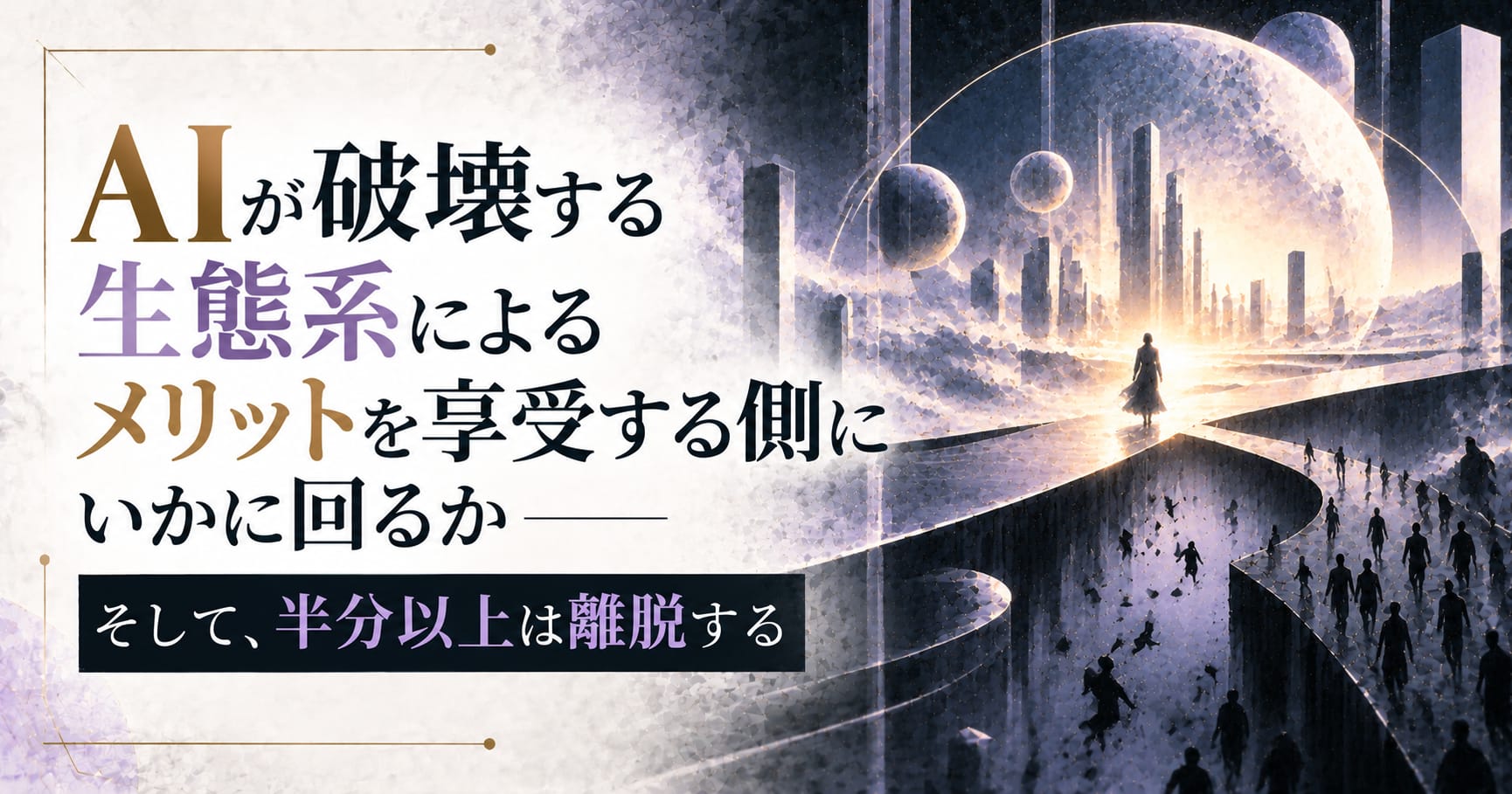
How to turn the benefits of ecosystems destroyed by AI to the side of those who benefit from them—and how to leave the other half behind
It is believed that businesses should start with what they want to do. However, the advent of AI is bringing a new wave to that. Sales…
-
The era in which AI will make individuals the most powerful—the reason we stopped looking for abilities that can't be matched by AI
Creating apps that only you use every day—replacing search or updating a handy tool for when you’re stuck—in an instant, now with AI…
Frequently Asked Questions
A "function rearrangement" occurs where the priorities of multiple functions inside the function are switched.
New inputs such as the environment, encounters, and crises cause unused functions to be activated, and the internal order of execution to be rearranged.
It is not just growth where the coefficient changes; it is a deeper transformation where the function itself changes into another function.


