

Asymmetric information is the main cause of limitations in human cognition.

- The "mystery judgment" arises from the asymmetry of information.
- ── What needs to be changed is not effort, but input.
- When pursued, information leads the way.
- — Stealing what you’re thinking about every day
- What comes after receiving it is the real thing.
- ── Reconfiguring the coordinate axes
- For Those Who Want to Learn More
- The age of AI where the importance of momentum is increasing—After the gap in intelligence is eliminated by AI, what remains in the end
- How to turn the benefits of ecosystems destroyed by AI to the side of those who benefit from them—and how to leave the other half behind
- The era in which AI will make individuals the most powerful—the reason we stopped looking for abilities that can't be matched by AI
- Frequently Asked Questions
Why did I make that choice at that time? Sometimes, looking back, I think about it.
One of the reasons for this is the asymmetry in information.
The asymmetry of information is too great, and as a result, people are sometimes forced to make decisions that they cannot explain themselves.
Even in terms of how to earn money, at numerous turning points in life, including when making time allocation decisions and how to use life, there are also choices to be made.
So, what is the core of judgment? This time, we will delve into that.
The "mystery judgment" arises from the asymmetry of information.
Asymmetric information refers to a situation where there is a bias in the amount and quality of information held between the parties involved in judgment and transactions. Acemoglu, in a 1970 paper, used the automobile market as an example to illustrate this structure, and the term later became commonly used after he received the Nobel Prize in Economics.
This time, instead of focusing on the market, I would like to apply it to the theme of life itself.
How much can we understand about how the world is moving?
What level of person is thinking about what right now? Those with and those without that information will make completely different judgments even in the same situation.
What is important here is that the judgment of the person without information is not necessarily foolish. Herbert Simon believed that human rationality operates only within the limits of the information and processing capacity at hand, and called this “limited rationality.” Looking back, even the mysterious judgments were, within the context of that moment’s information, properly rational.
── What needs to be changed is not effort but input.
If we want to improve the quality of our judgments, we first need to change the level of information that enters our minds. The information and perceptions that come from the core of our value judgments narrow or broaden our actions. As long as the core remains unchanged, no matter how hard we try, the scope of the judgments we make will remain unchanged.
When pursued, information leads the way.
However, this is not just about “getting more information and gaining a new perspective.” There is also a commitment to continuous exploration. This commitment creates a new perspective, which in turn attracts new information and leads to the next place.
Passut wrote, "In the realm of observation, chance only favors the prepared mind." Even if the same information passes by in front of us, only those who are prepared to pick it up can pick it up. Information is arranged to gather to those who seek it out.
── Stealing what they think about every day
Philosopher Michael Pollan said, "We know more than we can say," and called the unexpressed knowledge "tacit knowledge." The truly valuable part cannot be documented in manuals. It can only be transferred through continued close contact.
What comes after receiving it is the real thing.
Talking about the future and long-term plans, and talking about your positioning in the world are of course important as well.
Ultimately, it comes down to how to transplant that into our own brains and make it the trigger for new cell division to occur. The brain continuously rearranges its circuits based on experience. As long as it possesses this characteristic called neuroplasticity, the way we receive it can reshape our thoughts at any age.
── Re-align the coordinate axes
Everyone has a set of coordinates formed without much thought. Where to draw the line between their own boundaries and what they consider impossible. Most of it is just the sum of the information they have been exposed to so far.
I hope that projects initiated by village leaders such as this perspective media will serve as a catalyst for reconstructing your own perspective. How far can you destroy the boundaries you have set?
Whether it’s business, world peace, charity work, philosophy, meditation, sports, entertainment, or art—if you’re someone who truly believes this is something worth doing, please join us.
For Those Who Want to Learn More
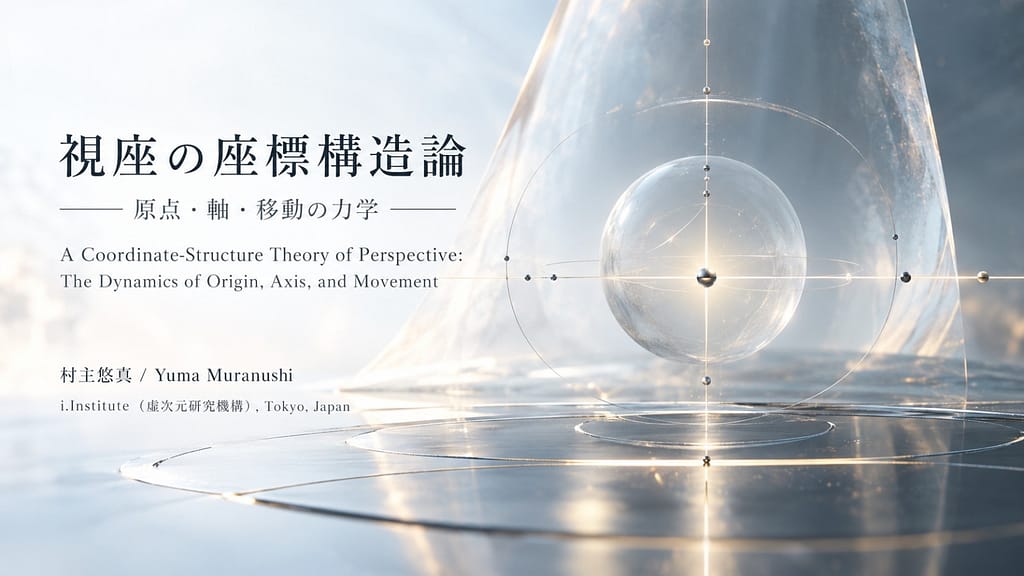
The “axes” and “range” discussed in this article are the central concepts of the paper that consider the perspective as a coordinate consisting of the origin, axis, and range, and discuss the dynamics of their movement.
"Coordinate structure theory of perspective view" (Paper 7) by Murashu Yu-chan (i.Institute)
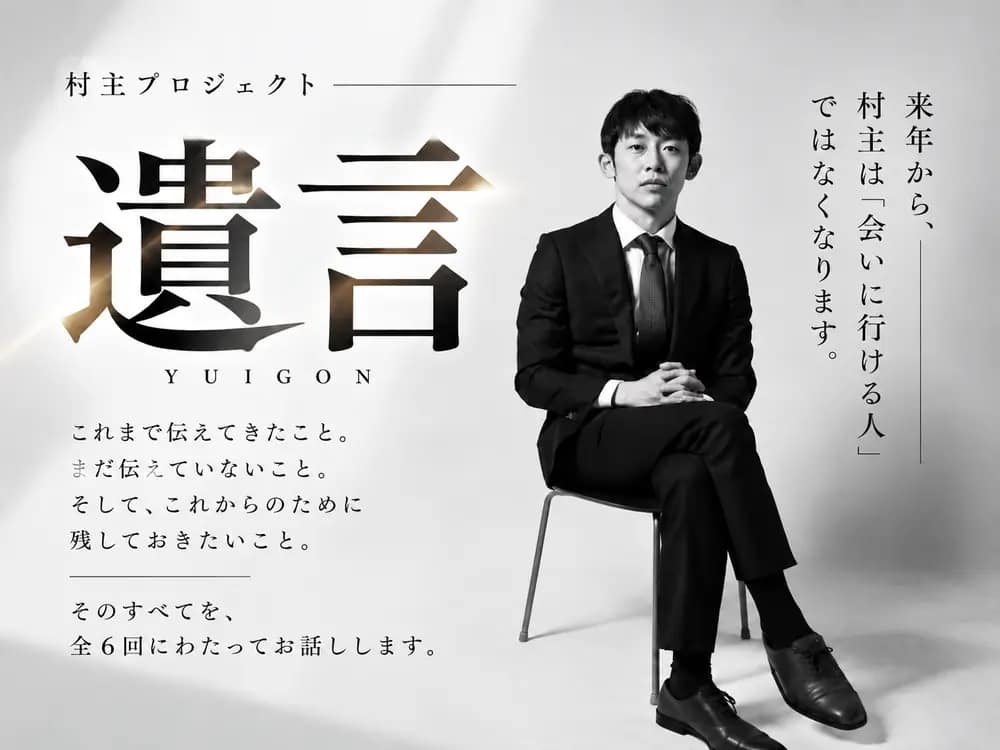
"Will" — Ongoing events through December
From what we can see now, to future plans, and to the core of decisions that we usually don’t talk about.
Everything that can be spit out will be spit out. The first and final episodes will be held in real life.
↓For more information about "Will" and how to apply, click here↓
↓Related articles are here↓
↓ Latest articles are here ↓
-
The age of AI where the importance of momentum is increasing—After the gap in intelligence is eliminated by AI, what remains in the end
This article examines what makes the difference in the AI era. In conclusion, it is said that "the part of the brain that is responsible for thinking and creating ideas..."
-

How to turn the benefits of ecosystems destroyed by AI to the side of those who benefit from them—and how to leave the other half behind
It is believed that businesses should start with what they want to do. However, the advent of AI is bringing a new wave to that. Sales…
-
The era in which AI will make individuals the most powerful—the reason we stopped looking for abilities that can't be matched by AI
Creating apps that only you use every day—replacing search or updating a handy tool for when you’re stuck—in an instant, now with AI…
Frequently Asked Questions
It refers to a situation where there is a bias in the amount and quality of information held among the parties involved in judgment and transactions. It became widely known when economist Akhorov used the example of the used car market.
This is because human rationality operates only within the limits of the available information. Within that information at that moment, the judgment can be said to have been properly rational.
Before you can improve your thinking, you need to change the level of information you receive. A persistent attitude creates a perspective, and that perspective in turn attracts new information.


