

"I have nothing" was not a flaw, but a talent—the more empty a person is, the more reason they have to achieve anything.

- Pure white paper can be used to create any kind of artwork.
- When the center is stained with "something," what is lost
- "No-self" and "true self" are not contradictory.
- Being empty is not a "power to create something."
- For Those Who Want to Learn More
- The age of AI where the importance of momentum is increasing—After the gap in intelligence is eliminated by AI, what remains in the end
- How to turn the benefits of ecosystems destroyed by AI to the side of those who benefit from them—and how to leave the other half behind
- The era in which AI will make individuals the most powerful—the reason we stopped looking for abilities that can't be matched by AI
- Frequently Asked Questions
Pure white paper can be used to create any kind of artwork.
On paper that has nothing drawn on it, you can paint any kind of picture. If a thick line is drawn first, you can only paint pictures that make use of that line. The same thing goes for strings tuned specifically for a particular piece of music; they become difficult to play in other pieces.
The fact that nothing is decided is the flip side of everything being able to happen.
Many people who feel they have nothing to offer compare themselves with others who have titles, expertise, and clear ideological convictions. However, the very people who possess something strong are also more likely to be less inclined to move in directions that don’t align with that “something.”
When the center is stained with "something," what is lost
Even those who hold the belief that "winning is everything" at the core of their mind can still speak of fairness. However, that fairness will gradually be measured by whether it serves to help them win.
If it helps to achieve victory, it is cherished; if it gets in the way, it is set aside. The value of one sitting at the center overrides the meaning of all the other values. Only when the center is free of all contamination can a person be open to all directions.
"No-self" and "true self" are not contradictory.
Buddhism preached the non-existence of a fixed self. On the other hand, some Mahayana Buddhism re-framed the self in terms of Buddha-nature or true self. This conflict has been discussed for a long time from India to the Kyoto school in modern Japan.
What if the center of the mind were a "nothingness," and it was this nothingness that enabled all measurements? Perhaps the no-self would speak of it in the words of negation, and the self-realization would be expressed in the words of affirmation.
Being empty is not a "power to create something."
However, if we consider the empty center to be the “creator” of the measuring stick, then the center becomes a substance with special powers. Even within Buddhism, this very point has been severely criticized.
By reinterpreting the concept of "only having nothing to hold on to," I depict the sky as a place where standards can be set, and I express that position as "the sky that generates."
The night when you feel like you have nothing is something that everyone experiences.
That feeling may be the moment when you just touched a little bit of something that hasn't yet been affected by anything else.
For Those Who Want to Learn More
The paper that underlies this article depicts the perspective as a structure of coordinates, then shows the correspondence between the zero value at the origin and the "emptiness" of Buddhism. It then responds to the classic questions about self with the concept of "generating emptiness." The relationship with the Kyoto School and critical Buddhism is also discussed.
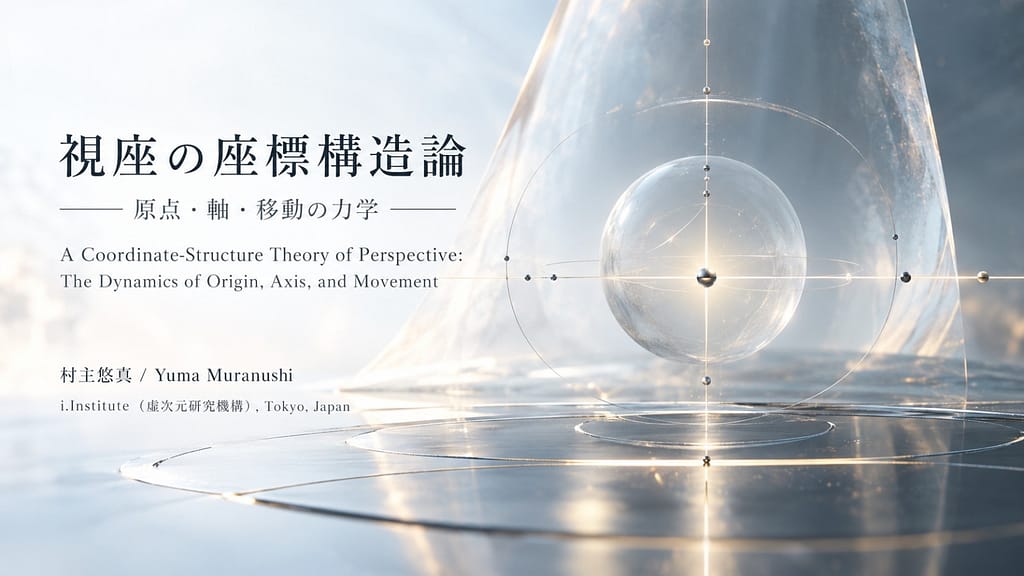
Murashu Yuuma (2026) "Coordinate structure theory of vision" ── "The Mechanics of Origin, Axis, and Motion"
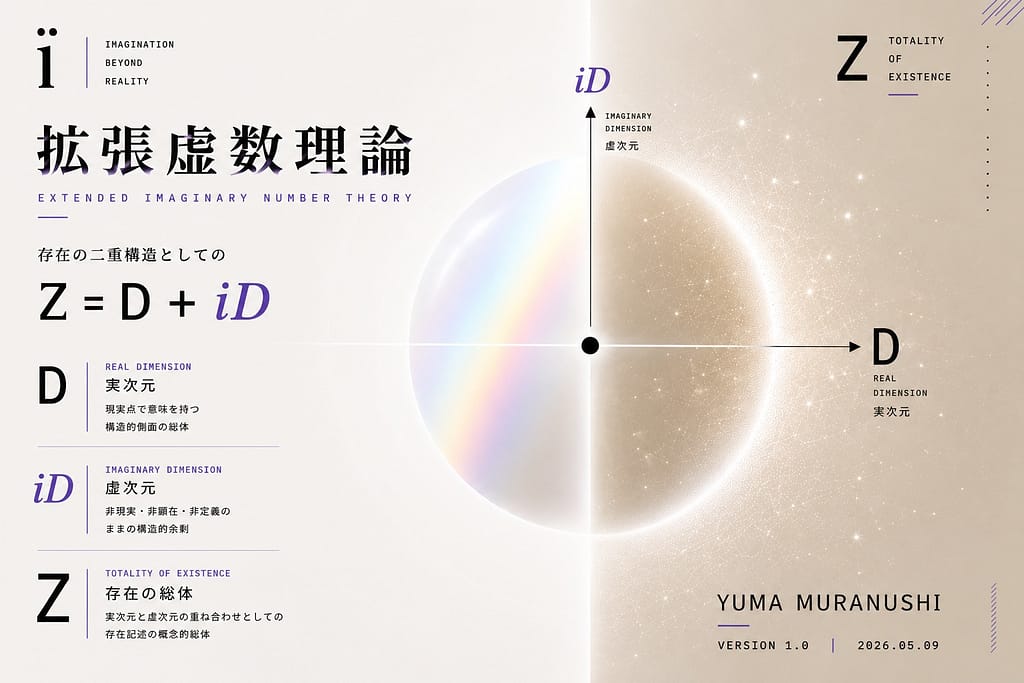
Murashu Yuuma (2026) "Extended Abstraction Theory: As a Double Structure of Existence"Z = D + ID』
↓For those who want to know more, check out "θ-galleries" now↓
↓Related articles are here↓
↓Latest posts are here↓
-
The age of AI where the importance of momentum is increasing—After the gap in intelligence is eliminated by AI, what remains in the end
This article examines what makes the difference in the AI era. In conclusion, it is said that "the part of the brain that is responsible for thinking and creating ideas..."
-
How to turn the benefits of ecosystems destroyed by AI to the side of those who benefit from them—and how to leave the other half behind
It is believed that businesses should start with what they want to do. However, the advent of AI is bringing a new wave to that. Sales…
-
The era in which AI will make individuals the most powerful—the reason we stopped looking for abilities that can't be matched by AI
Creating apps that only you use every day—replacing search or updating a handy tool for when you’re stuck—in an instant, now with AI…
Frequently Asked Questions
It’s not a bad thing. What’s not decided is the flip side of what can happen to anything.
When the center is imbued with a single value, other values are also measured by that standard and become less likely to move in the direction that is not compatible with it.
If the center of the mind is “nothingness,” then it is possible that the word “non-self” refers to negation, while the word “true self” refers to affirmation.


