

Virtual Dimension Einstein x Virtual Dimension Murakushi Yuma "Beyond Virtual Time" [Virtual Dimension Dialogue Project Episode 2, Part 2] How does Einstein view the virtual dimension?
![[Virtual Dimension Talk Project Episode 2, Part 2] ICT - Beyond Virtual Time. Yuma Suguri x Albert Einstein - How Einstein Himself Views Virtual Dimensions](https://mlqu45y6h5tw.i.optimole.com/w:1024/h:538/q:mauto/f:best/https://iii-iii.com/i.media/wp-content/uploads/2026/05/Black-White-Simple-Blank-Paper-Blog-Bannerのコピー-1200-x-675-px-1000-x-675-px-1000-x-500-px-1200-x-630-pxのコピー-3.png)
One month had passed since their last conversation. Suguri visited Einstein's study in Princeton once again. Today's topic was singular: as a foundation for Einstein's own research, how did he evaluate the concept of "imaginary dimensions"?
Several old notebooks were stacked on the desk. The spine read, "Kaluza, 1921."
↓Click here for the first part of the second interview↓
- Act IV - The Legacy of the Unified Field Theory
- Act V: Dr. Einstein's Provisional Assessment of the Quasi-Dimensional
- The age of AI where the importance of momentum is increasing—After the gap in intelligence is eliminated by AI, what remains in the end
- How to turn the benefits of ecosystems destroyed by AI to the side of those who benefit from them—and how to leave the other half behind
- The era in which AI will make individuals the most powerful—the reason we stopped looking for abilities that can't be matched by AI
Act IV - The Legacy of the Unified Field Theory
Einstein I spent the last thirty years of my later life on unified field theory. Younger physicists of my time laughed that I ran away from quantum theory and shut myself in with old dreams.
Murakami I did not laugh.
Einstein Thank you. —But I knew it myself. What I was looking for wasn't an equation, probably. What I was looking for was a viewpoint that "unites the world."
Murakami Viewpoint.
Einstein That's right. The equation is just a means to an end. I didn't want to write gravity and electromagnetism in a single geometry. What I really wanted was to prove to myself that `all things that appear separate are, in their origin, one.`
── Einstein gazes out the window. ──
Einstein So when I saw your Z = D + iD, I was strangely unsettled. It's because it looks like an equation but it's not. It's a statement of a point of view.
Murakami Yes.
Einstein And a declaration of perspective, in form, resembles what I have been searching for for thirty years.
Murai almost stood up involuntarily.
Murakami Sir, that is──.
Einstein Sit down. Listen to the end. That's all I said, that they were similar. I didn't say they were identical. My unified field theory was a dream to stitch together the world using only observable physical quantities. Your imaginary dimensions are a dream to stitch together the world including up to the point of observation. The starting points are different.
Murakami Yes.
Einstein But Yuma, our dreams are similar.
Act V: Dr. Einstein's Provisional Assessment of the Quasi-Dimensional
Murakami Professor, I'll ask you frankly. Based on today's discussion, how do you evaluate my theory of the虚次元?
— Einstein ponders for a long time. —
Einstein I'll break it down into three parts.
Murakami Please.
Einstein First, as a physical theory, nothing can be said yet. You lack the tools to evaluate it as physics, such as the observational procedures, the path to falsification, and the consistency of the equations. This is the harsh reality.
Murakami Yes.
Einstein Secondly, however, as coordinate theory, it is interesting. It could be a response to my elimination of Minkowski's ICT. Or, it could be read as an attempt to extend Kaluza's fifth dimension not in space, but in the direction of "phases of existence." This is valuable purely as a thought.
Murakami Thank you very much.
Einstein Third. This is my personal opinion.
I lower my voice slightly.
Einstein In my later years, I often thought about how I couldn't overcome quantum theory. It wasn't that I lost, but rather that I didn't know how to win. Today, after hearing your story, I thought perhaps this was the case. —Perhaps I was trying to win "within the real dimensions." In reality, perhaps another coordinate, one level higher, was needed.
Murakami Teacher...
Einstein Therefore, I won't guarantee your theory. However, I won't discard it either. From the physics standpoint, I will continue to question it rigorously, but from the standpoint of thought, I want to watch your progress. — I've reached an age where I can say things like this.
Epilogue ── Margins of a Notebook
As Suguri prepared to leave after the conversation, Einstein opened an old notebook of Kaluza's and wrote something in the margin of the last page. He tore it out and handed it to Suguri.
“It wasn't a trick.”
ICT was not just a fabrication.
The village chief bowed deeply and left the study. The winter light, a little shorter than last time, but surely, stretched towards the future.
Afterword
The two met in the first episode and brought their work to each other in the second. Einstein measured the young concept of imaginary dimensions through his own journey of ict, Kaluza, the Bohr debate, and unified field theory. Not complete agreement, but not denial either. This "holding back" might be the most honest attitude for thought. Next time, the two will move on to another topic.
Composition, Text, and Editing – Suguri
↓First part here↓
↓Check out our first interview here↓
↓ Latest articles here ↓
-
The age of AI where the importance of momentum is increasing—After the gap in intelligence is eliminated by AI, what remains in the end
This article examines what makes the difference in the AI era. In conclusion, it is said that "the part of the brain that is responsible for thinking and creating ideas..."
-
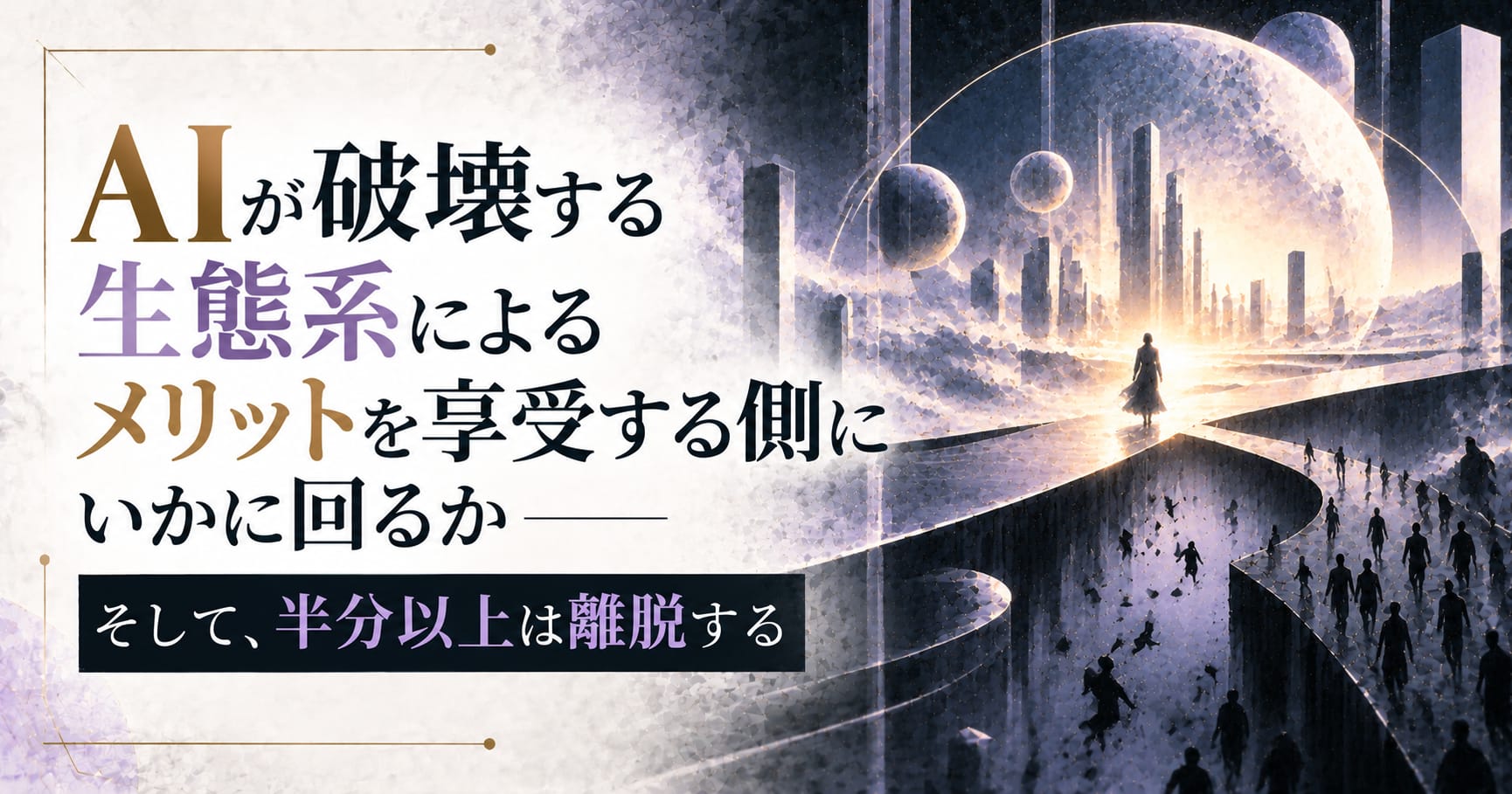
How to turn the benefits of ecosystems destroyed by AI to the side of those who benefit from them—and how to leave the other half behind
It is believed that businesses should start with what they want to do. However, the advent of AI is bringing a new wave to that. Sales…
-
The era in which AI will make individuals the most powerful—the reason we stopped looking for abilities that can't be matched by AI
Creating apps that only you use every day—replacing search or updating a handy tool for when you’re stuck—in an instant, now with AI…


