
What's the difference between a "wise person" and someone with "high perspective"? Speed of thought and scope of vision are entirely different matters.

He's quick to speak. His logic is sharp. He's good at shutting down counterarguments.
That's certainly "intelligence." However, that's a different story from having a high perspective.
These two are easily confused. This time, I'd like to briefly show you the difference.
- Intelligence is the ability to move quickly across a map.
- When intricate logic becomes a bulwark
- Wise people provide answers. Those with a high perspective change the questions.
- Either speed or breadth, without one, thought is distorted.
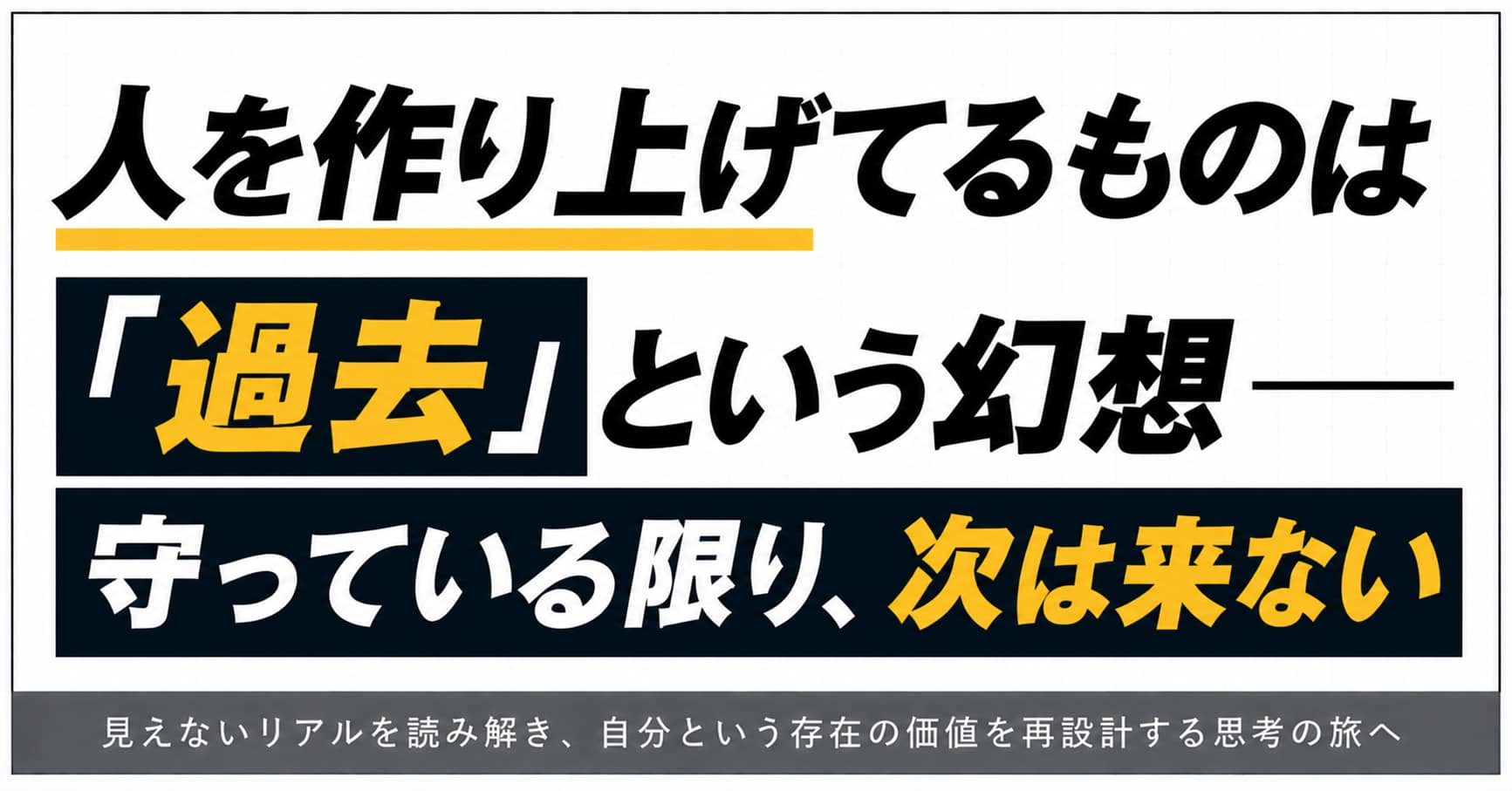
- What creates people is the illusion of a "past"—as long as we protect it, the next one won't come.
- Nothing is greater than your own capacity—no one, no information, no money, everything is determined by the limits of your tolerance.
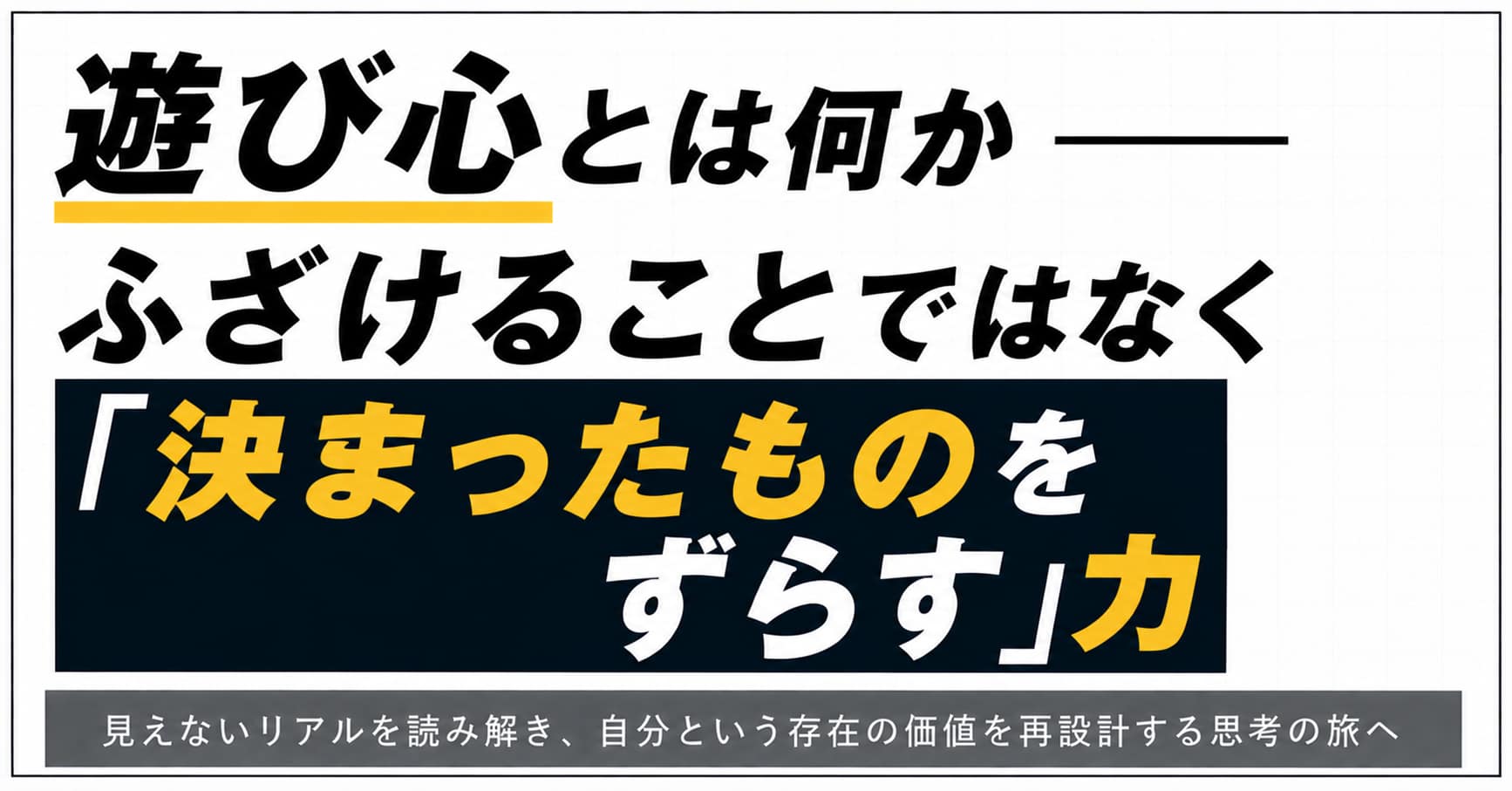
- What is playfulness? It is not about messing around, but the power to "shift the established."
Intelligence is the ability to move quickly across a map.
Intelligence is the processing power within a given coordinate system.
Fast calculation, high accuracy in grasping structure, and sharp verbalization. These are all "abilities that operate on an existing map." They do not question the map itself. The accuracy of behavior on the map is intelligence.
Having a high perspective means having a broad view of the map you're seeing, and even more than that, it's the ability to question the map itself and sense the existence of other maps. It's the power to think that the map you're currently on might not be the only one. That doubt moves your perspective.
Intelligent people don't necessarily have a high perspective. Sometimes, intelligence reinforces a fixed perspective.
When intricate logic becomes a bulwark
What do you mean?
People who excel at logical thinking can precisely construct conclusions derived from their own perspectives. The more precise they perceive their constructions to be, the more likely they are to be convinced of their correctness. Elaborate logic often appears unassailable. Therefore, when a question arises that challenges their perspective, that elaborateness serves as a defense.
In other words, intelligence is the event of "getting outside of one's perspective."
People with a high perspective know that their logic is merely logic "seen from a specific ground." They remain convinced, yet continue to doubt. They build meticulously, yet can let go by thinking "this is just one way of seeing." This coexistence is another great value of a high perspective.
Wise people provide answers. Those with a high perspective change the questions.
There's another difference. It's the quality of the questions.
Wise people are quick to come up with "answers." People with a high perspective change the dimension of their "questions."
Instead of "How can we win?", ask "Should we even be fighting this battle in the first place?". Instead of "Why did we fail?", ask "Is viewing this through the lens of failure truly the right approach?". Instead of "How can we persuade them?", ask "Is there something misaligned in the act of trying to persuade them itself?".
When the question changes, the way you see the world changes. Altitude of perspective is the dimension of the question. Someone who can ask deeper questions has a higher perspective.
Either speed or breadth, without one, thought is distorted.
The question of whether wisdom or a high perspective is more important is misguided. Both are necessary, and if either is lacking, thinking becomes distorted.
Generally speaking, since most people develop their intelligence first, it’s important to consciously work on broadening one’s perspective. I also think that one of the characteristics of perspective is that it can be expanded relatively easily.
The effort to become smarter and the effort to broaden one's perspective are two different things.
Wisdom grows with knowledge and training. Perspective grows with questioning and observation.
While many people gather a lot of information to become smarter, why not try reorganizing your time allocation with a slightly expanded perspective in the future?
To broaden your perspective, check out "Λ Meditation" now.
↓Related articles are here↓
↓ Latest articles are here ↓
-

What creates people is the illusion of a "past"—as long as we protect it, the next one won't come.
People are made up of what they have built up through their lives. They must cherish and protect what they have built, rise from failure, and continue to waver between regret and hope...
-
Nothing is greater than your own capacity—no one, no information, no money, everything is determined by the limits of your tolerance.
No good news comes. There are times when I feel that I haven't been lucky. But it's not that I haven't received it; it's just that I haven't been able to receive it...
-

What is playfulness? It is not about messing around, but the power to "shift the established."
Don't be fooled by the idea that "playfulness equals fooling around." First and foremost, playfulness is not just about messing around and being lazy...