Why "relaxing your grip" leads to success – An active stance of not trying to grasp

"Relax your shoulders and it will go well" - Everyone has had that experience.
Whether in sports, relationships, or creative endeavors, performance improves when you relax. This is a well-known empirical fact.
But few people can structurally explain why that is.
- "Loosening your muscles" is not a physiological slackening.
- A deep layer exists there
- The pressure to grab holds you back from standing up.
- The common structure across the three scenes
- "Relaxing" doesn't mean doing nothing.
- ── An active function of not being overly decisive
- The direction of agency, from "grasping" to "allowing."
- When you are in the position of being forgiven, the world starts to move.
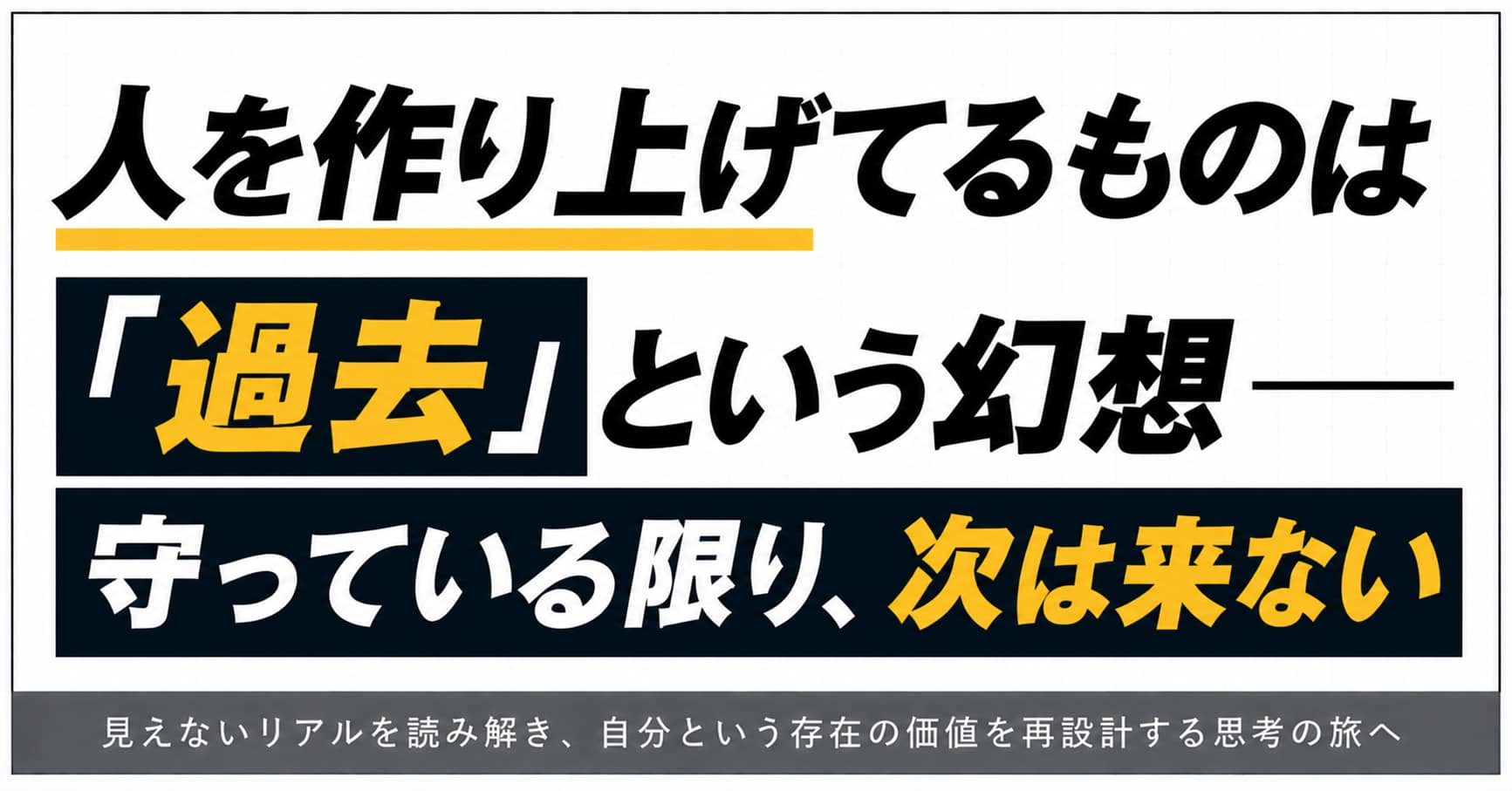
- What creates people is the illusion of a "past"—as long as we protect it, the next one won't come.
- Nothing is greater than your own capacity—no one, no information, no money, everything is determined by the limits of your tolerance.
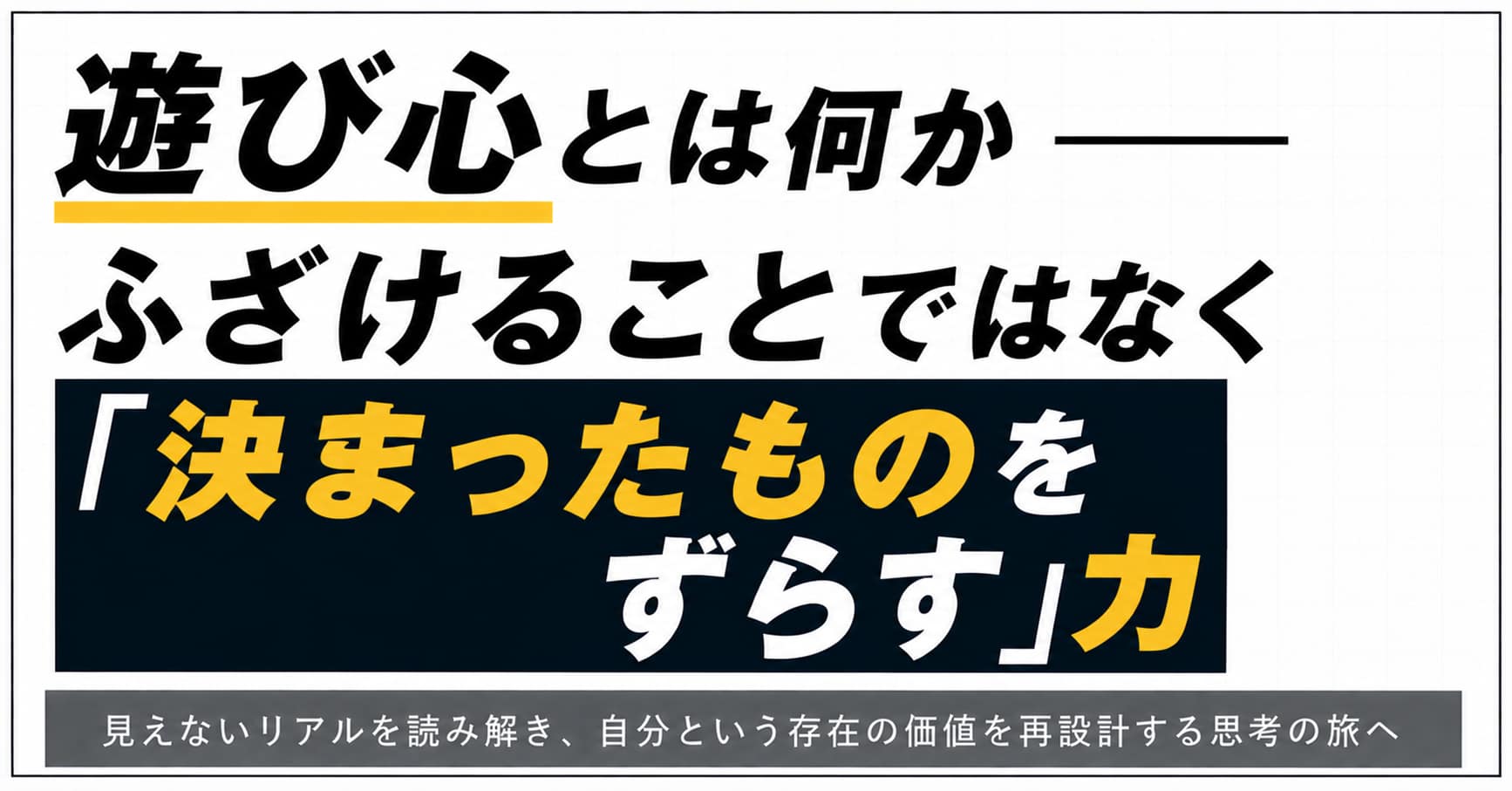
- What is playfulness? It is not about messing around, but the power to "shift the established."
"Loosening your muscles" is not a physiological slackening.
A deep layer exists there
There are many discussions that describe "relaxing your muscles" as mere relaxation or letting go of tension.
Muscle relaxation, breathing exercises, and meditation are all techniques that reduce physical and physiological tension. These are certainly effective. However, the essence of relaxation is not solely physiological looseness.
There's another deeper layer. That is,A change in stance, not reaching out to grab the target That's right.
When we work on something, we unconsciously put pressure on ourselves to "grasp," "extract," or "control" the subject. This very pressure distorts the situation as a result.
The pressure to grab holds you back from standing up.
The common structure across the three scenes
Let's take a closer look.
I try to speak up in meetings, but the right words don't come to me. I feel pressured to "say it properly." The moment I relax my tension, the words I've been waiting for come.
I'm giving a speech in front of people. When the pressure of "I can't fail" dominates the atmosphere, the words that would normally flow smoothly get stuck. The moment I relax, the talk begins to flow.
When I try too hard to create something good in my creative work, only ordinary ideas come out. When I step away, go for a walk, and come back, the idea I was looking for is already there.
What these have in common is,The pressure to grasp is what prevents you from standing up. It's structured like that.
"Relaxing" doesn't mean doing nothing.
── An active function of not being overly decisive
There's an important distinction here.
To relax one's musclesDo nothing It's not that. It's that,The active functioning of not over-determining is.
I call it "Positive non-interventionis called.
If you do nothing, the situation will become scattered and nothing will come of it. On the other hand, if you try too hard, the situation will become rigid and there will be no room for anything new to enter.
The stance in between is "relaxing your strength." It means maintaining the situation without over-dominating it. You are ready to receive, but you don't actively pursue it.
This is a posture that requires skill, because human cognition,Pressure that always tilts in the direction of graspingIt is because there is. Resisting that pressure, I keep the field open. This appears to be doing nothing, but in reality, it requires constant proactivity.
The direction of agency, from "grasping" to "allowing."
When you are in the position of being forgiven, the world starts to move.
Why do letting go of tension and succeeding go hand in hand?
That is,The pressure to grasp is preventing me from standing up. Body. The moment the pressure is released, what was being held back gains room to rise.
Relaxing doesn't mean abandoning initiative.
Inverting the direction of agency from "grasping" to "releasing" That's right.
And when you are in the position of being forgiven, the world begins to move.
↓Murakami's Second Paper, "A Structural Theory of Origins," is here↓
↓Related articles are here↓
↓ Latest articles are here ↓
-

What creates people is the illusion of a "past"—as long as we protect it, the next one won't come.
People are made up of what they have built up through their lives. They must cherish and protect what they have built, rise from failure, and continue to waver between regret and hope...
-
Nothing is greater than your own capacity—no one, no information, no money, everything is determined by the limits of your tolerance.
No good news comes. There are times when I feel that I haven't been lucky. But it's not that I haven't received it; it's just that I haven't been able to receive it...
-

What is playfulness? It is not about messing around, but the power to "shift the established."
Don't be fooled by the idea that "playfulness equals fooling around." First and foremost, playfulness is not just about messing around and being lazy...