
Why the Status Quo Bias Can't Be Overcome by Willpower: A Deep Dive Beyond Behavioral Economics

I understand I should change.
And yet, I can't move.
At this time, the one operating is,Status quo bias That's right.
In behavioral economics, this bias was formulated in 1988 by Samuelson and Zeckhauser. Humans tend to choose to maintain the status quo when presented with options of equal value. This is a significant deviation from the rational economic agent model and has been repeatedly verified academically.
However, this explanation alone is insufficient.
Three causes indicated by behavioral economics
Behavioral economics primarily cites three causes for the status quo bias.
One is,Loss aversionAs Kahneman and Tversky showed, people feel losses about twice as strongly as gains. Therefore, "what you lose by changing" appears greater than "what you gain by changing."
Two are,Decision fatigueDecisions require energy, so the "option not to decide" which is the status quo, is chosen.
ThreeEndowment effectThe tendency to place a value on things already possessed that is higher than their objective worth.
These three alone can partially explain why people are unable to act.
However, the level being discussed here is not what people who are truly unable to move are facing.
- Three causes indicated by behavioral economics
- In terms of knowledge, it's indispensable.
- Layer where bias is active
- The place to fight is wrong.
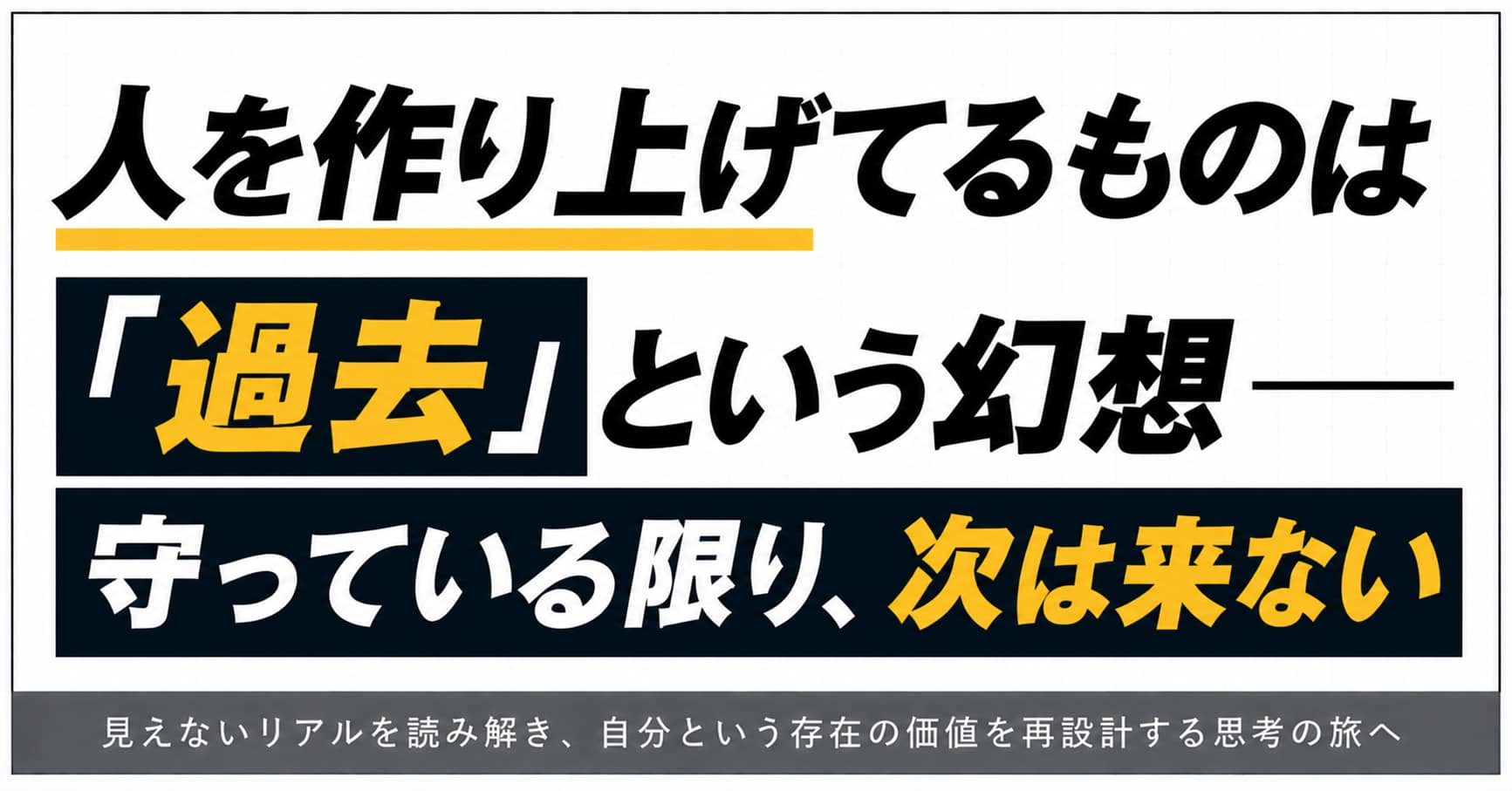
- What creates people is the illusion of a "past"—as long as we protect it, the next one won't come.
- Nothing is greater than your own capacity—no one, no information, no money, everything is determined by the limits of your tolerance.
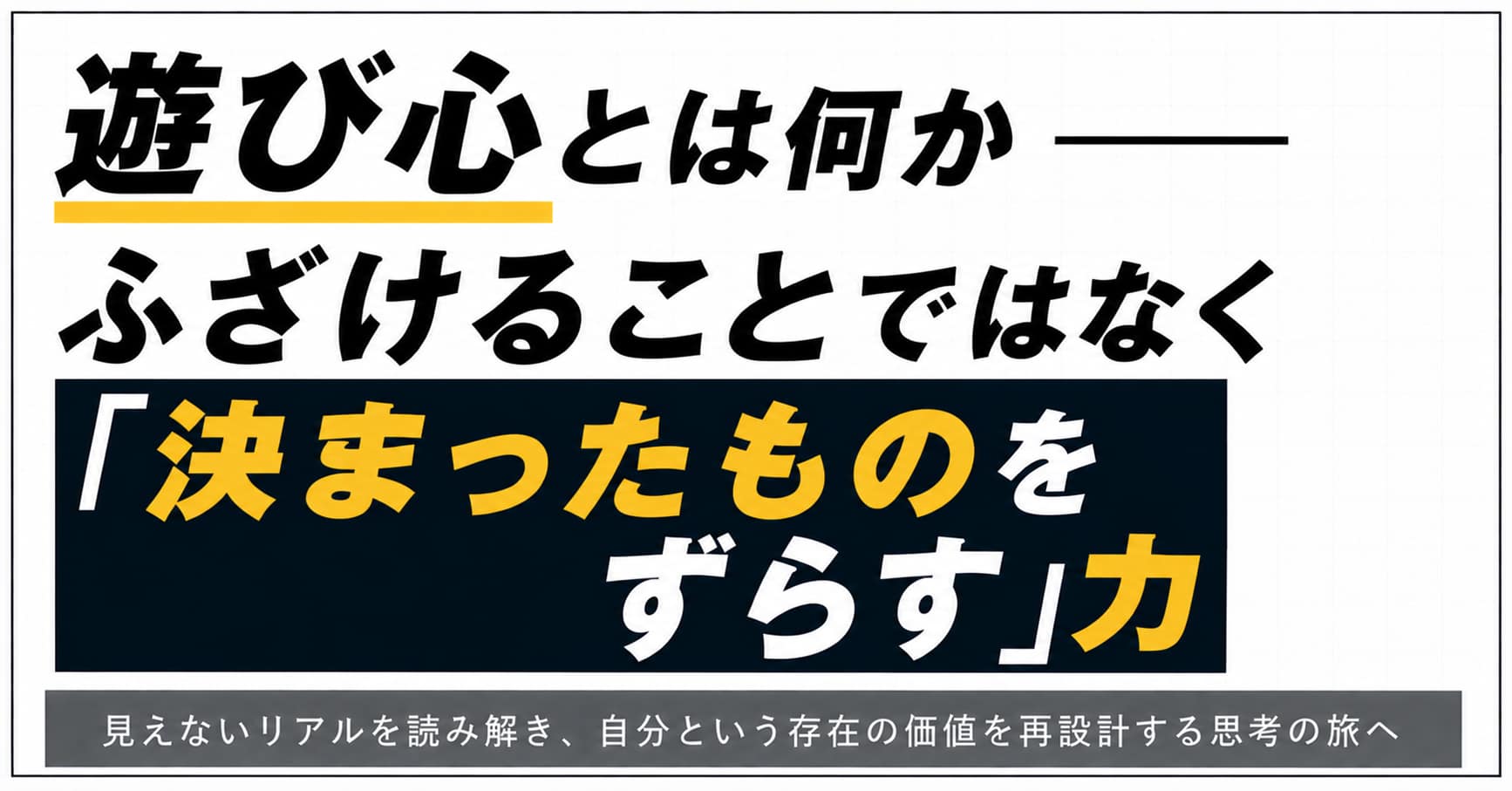
- What is playfulness? It is not about messing around, but the power to "shift the established."
In terms of knowledge, it's indispensable.
Please think about it.
"If you understand loss aversion, can you change?"
"If you realize that this is the endowment effect, then you can take action," or so the saying goes.
For most people, the answer is No That's right.
Even those who have studied behavioral economics can't shake their own status quo bias. Knowing that a bias exists and being able to overcome it are entirely different things.
Why?
bias is,Not operating at a conscious level Body.
Layer where bias is active
Behavioral economics, observed behavior to describe It's about academia. Not delving deeply into the reasons why people avoid losses. It's about organizing statistical facts, such as "there is such a tendency."
However, what is truly needed by those who cannot move is not that description.Where bias is at play To understand it more deeply.
It is not a cognitive problem, but also a problem of survival strategy.
This is not an information processing problem, but a problem of a species' reaction, refined over millions of years.
It is not an individual problem, but a problem related to the pressure created by society as a whole.
These layers don't fit neatly into the framework of behavioral economics.
The place to fight is wrong.
Even if I tell myself "be stronger" or "try harder," the status quo bias doesn't go away.
There are many people who can't change, even after reading 100 self-help books, and here's why.
The place to fight is wrong.
We must address what is operating at a deeper, more fundamental level, not just at the level of will, if we are to escape.
And the vocabulary for directly observing that device lies in a different realm from the vocabulary of behavioral economics.
The status quo bias is not a matter of weak willpower.
That is,What is preventing me from moving, and from where? It is merely the introductory words to see.
↓ For those who want to know more, check out the Theta Corridor III "Limiters and Control Rods" now ↓

↓Related articles are here↓
↓ Latest articles here ↓
-
What creates people is the illusion of a "past"—as long as we protect it, the next one won't come.

People are made up of what they have built up through their lives. They must cherish and protect what they have built, rise from failure, and continue to waver between regret and hope...
-
Nothing is greater than your own capacity—no one, no information, no money, everything is determined by the limits of your tolerance.
No good news comes. There are times when I feel that I haven't been lucky. But it's not that I haven't received it; it's just that I haven't been able to receive it...
-
What is playfulness? It is not about messing around, but the power to "shift the established."

Don't be fooled by the idea that "playfulness equals fooling around." First and foremost, playfulness is not just about messing around and being lazy...