
Things to know before you stop "overthinking" - Three structures that prevent you from standing up

Advice on how to stop overthinking is abundant in the world.
Take a deep breath. Write it down. Create distance. Mindfulness. Change your scenery. These are certainly effective. However, before resorting to symptomatic treatments, it's worth structurally examining why overthinking occurs in the first place.
Overthinking isn't just a runaway negative thought. It stems from three structural habits that prevent us from getting back up.
- The first structure - Cognitive Overdetermination
- Second Structure—Interpretive Saturation
- The Third Structure: Self-Grasp
- Let's look at the three structures first.
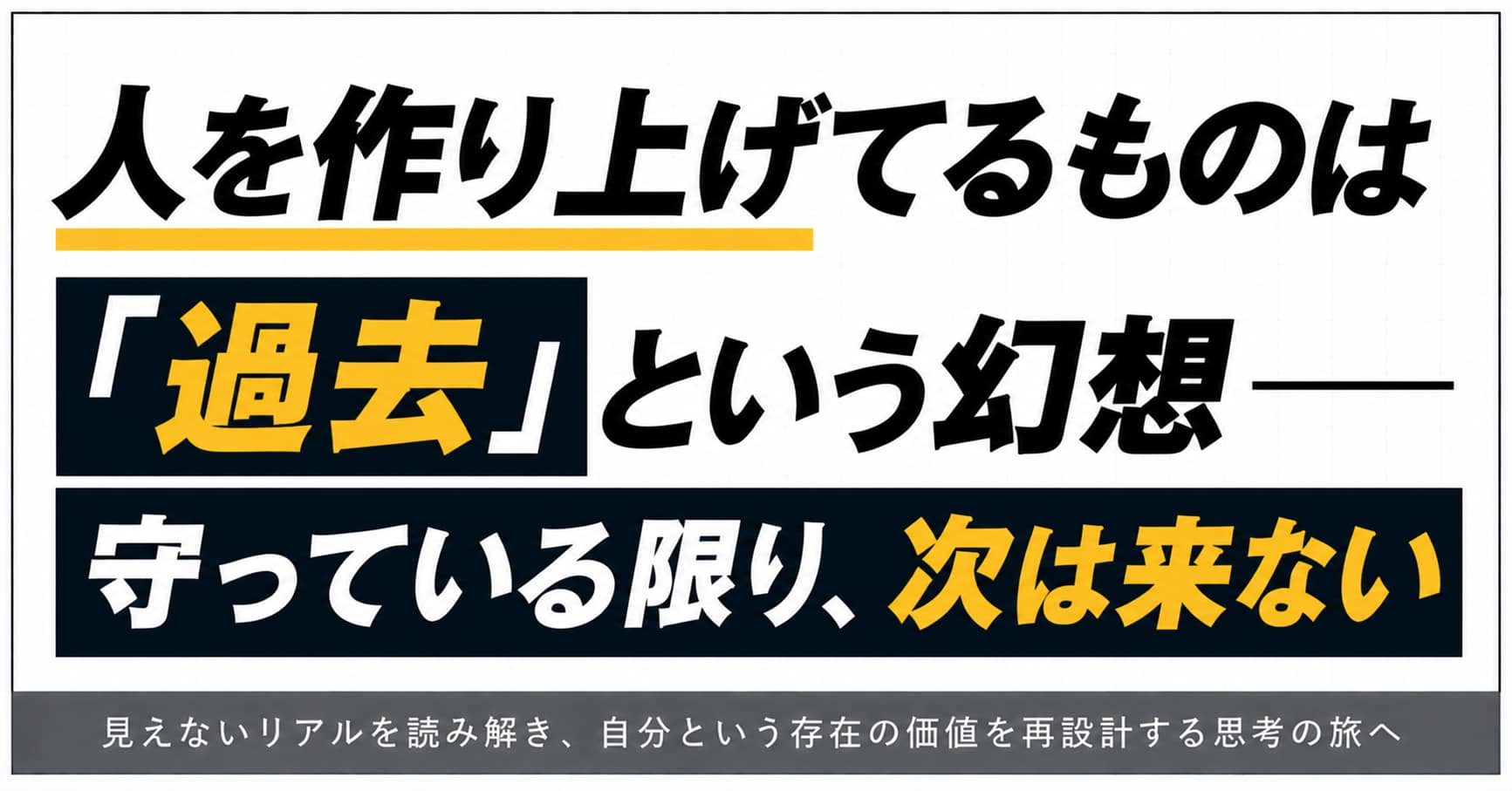
- What creates people is the illusion of a "past"—as long as we protect it, the next one won't come.
- Nothing is greater than your own capacity—no one, no information, no money, everything is determined by the limits of your tolerance.
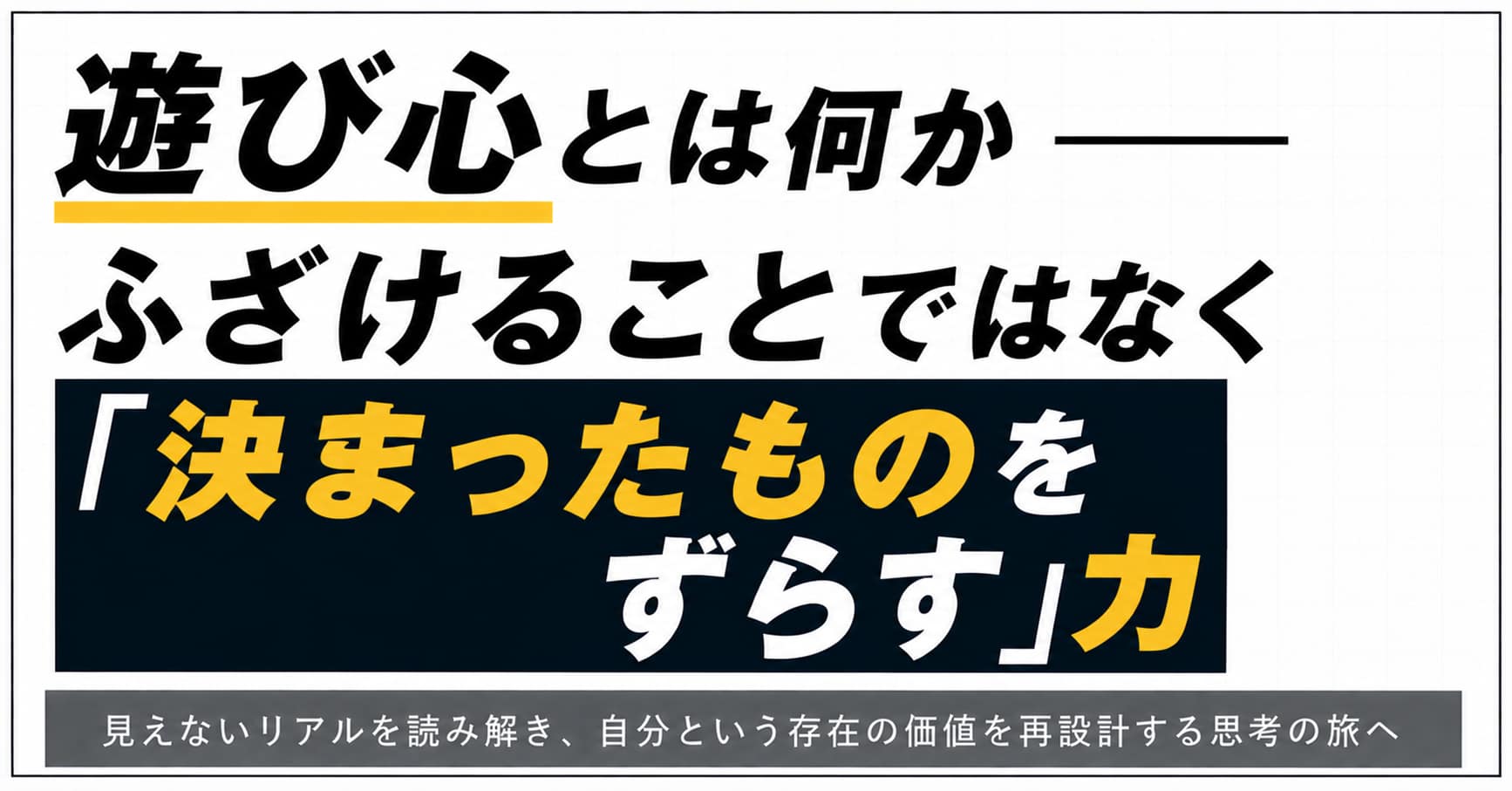
- What is playfulness? It is not about messing around, but the power to "shift the established."
The first structure - Cognitive Overdetermination
When your thinking is rigid, the more you think, the more you get lost in a maze.
A state where the network of meanings within oneself about a certain subject is already overdetermined. Conclusions are preemptively fixed, such as "This is the kind of person I am," "That person is the kind of person they are," or "This problem should be this way."
In this situation, there is structurally no room for new initiatives to emerge. No matter how much I think about it, I just end up going in circles within the predetermined framework.
Overthinking isn't about having too many thoughts; it's a manifestation of rigid thinking patterns.
Second Structure—Interpretive Saturation
You are not looking at the event, you are looking at the interpretation.
This is a situation where new materials are immediately incorporated into existing interpretive frameworks the moment they appear.
For example, the moment someone says something, they automatically interpret it as "This is sarcasm," "This is an attack," or "This is an evaluation of myself." The interpretation preempts the rise, forcing the material into a frame before it can take its own shape.
The more someone overthinks, the less aware they are of the speed of their own interpretations. They aren't seeing events, but rather the interpretations automatically generated the moment they perceive an event.
The Third Structure: Self-Grasp
When attachment dominates the scene, rising up is suppressed.
"I want to be right," "I don't want to lose out," "I have to find the answer" -- when obsessions like these dominate a situation, initiative is suppressed.
This is the obstacle most often spoken of in contemplative traditions. This is what you are told to "let go of" and "release your attachment to."
However, it occurs independently of the first and second structures. Even without egocentric attachment, overdetermination and interpretive saturation can occur. This is precisely why it is worthwhile to consider them separately in three parts.
Let's look at the three structures first.
Before resorting to symptomatic treatment, ask yourself what's going on inside.。
When you feel like you want to stop overthinking.
Before resorting to symptomatic treatment, it's good to consider which of these three is occurring within you.
Is the web of meaning rigid? Is interpretation preemptive? Is self-centered attachment dominating the situation?
As long as any of these are happening, deep breaths and diversions will only be temporary. This is because there is structurally no room for new beginnings.
Stopping overthinking doesn't mean stopping thinking.
It is about leaving room for resurgence within yourself.
Loosen the web of meaning. Delay interpretation. Set aside attachment.
Then, something arrives from outside the swirling thoughts.
That is the true structure for getting out of overthinking.
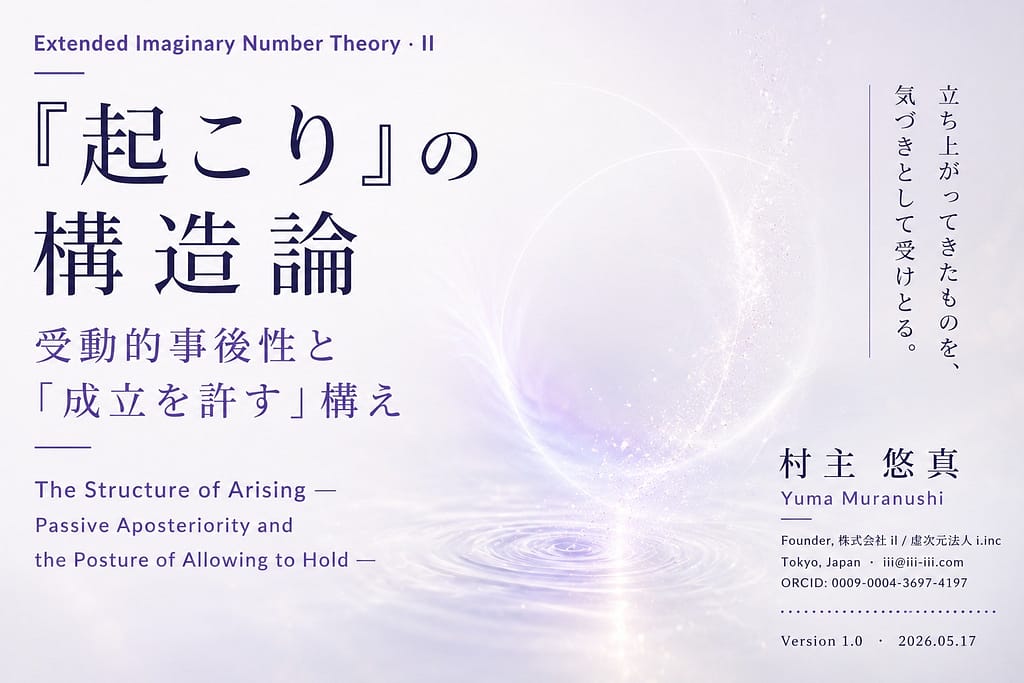
↓Murakami's Second Paper, "A Structural Theory of Origins," is here↓
↓Related articles are here↓
↓Latest posts are here↓
-

What creates people is the illusion of a "past"—as long as we protect it, the next one won't come.
People are made up of what they have built up through their lives. They must cherish and protect what they have built, rise from failure, and continue to waver between regret and hope...
-
Nothing is greater than your own capacity—no one, no information, no money, everything is determined by the limits of your tolerance.
No good news comes. There are times when I feel that I haven't been lucky. But it's not that I haven't received it; it's just that I haven't been able to receive it...
-

What is playfulness? It is not about messing around, but the power to "shift the established."
Don't be fooled by the idea that "playfulness equals fooling around." First and foremost, playfulness is not just about messing around and being lazy...