
The dilemma that people who only do "things that are useful right now" fail to increase in value: One's value is made of the multiplication of scarcity and the reverse calculation of the time horizon on which one is evaluated.

- Talking about "market value" instead of "personal value"
- Market value is the multiplication of scarcity.
- Scarcity is not something you are born with, but something you create later.
- The further the multiplication, the higher the scarcity skyrockets.
- The starting point of multiplication is "what you do naturally."
- What "self" is can only be expressed through external information.
- The criterion for increasing value is "things that are not useful right now"
- Cast the evaluation timeline into the future
- The utility of uselessness: trees that are of no use are left uncut.
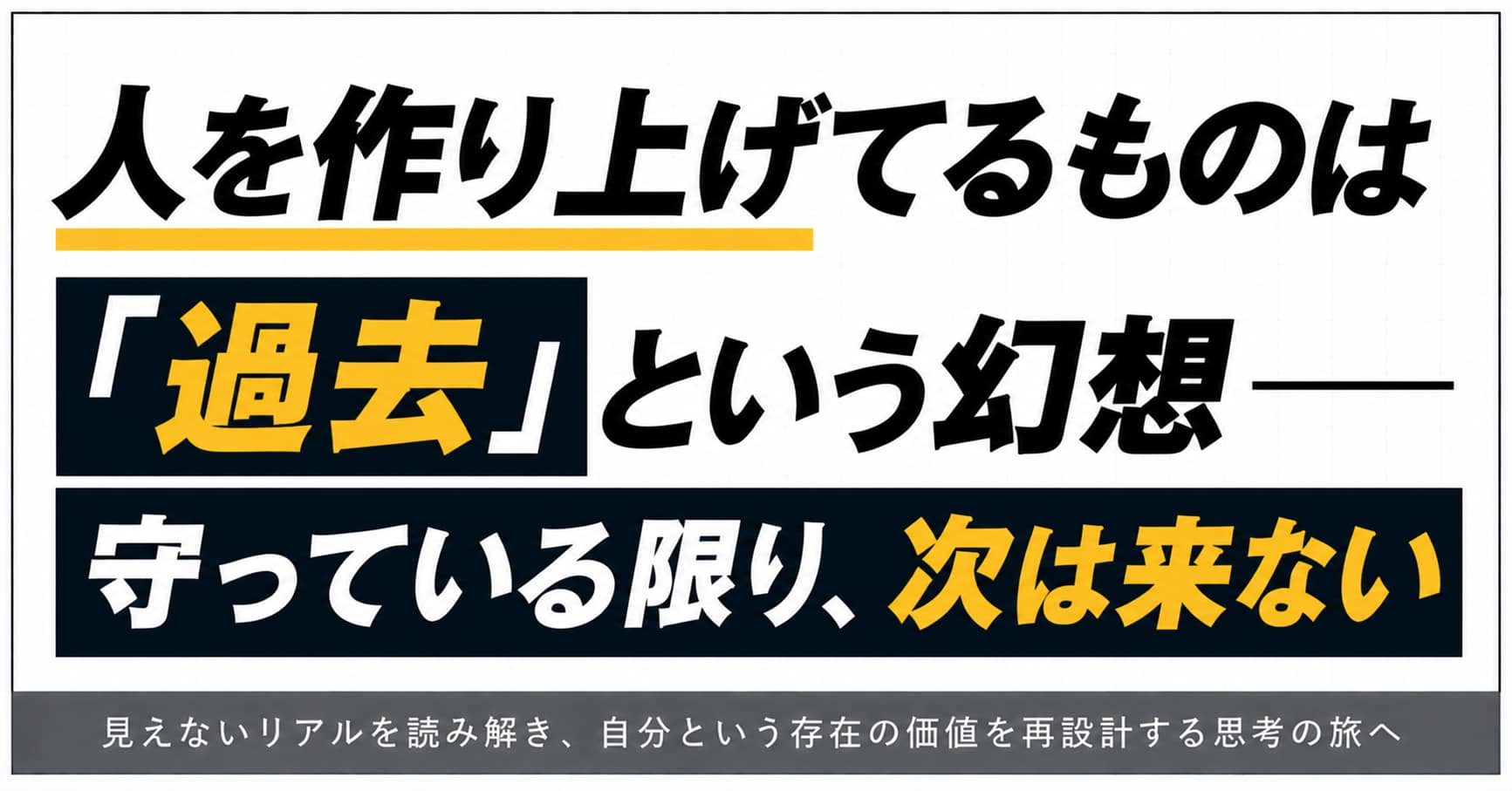
- What creates people is the illusion of a "past"—as long as we protect it, the next one won't come.
- Nothing is greater than your own capacity—no one, no information, no money, everything is determined by the limits of your tolerance.
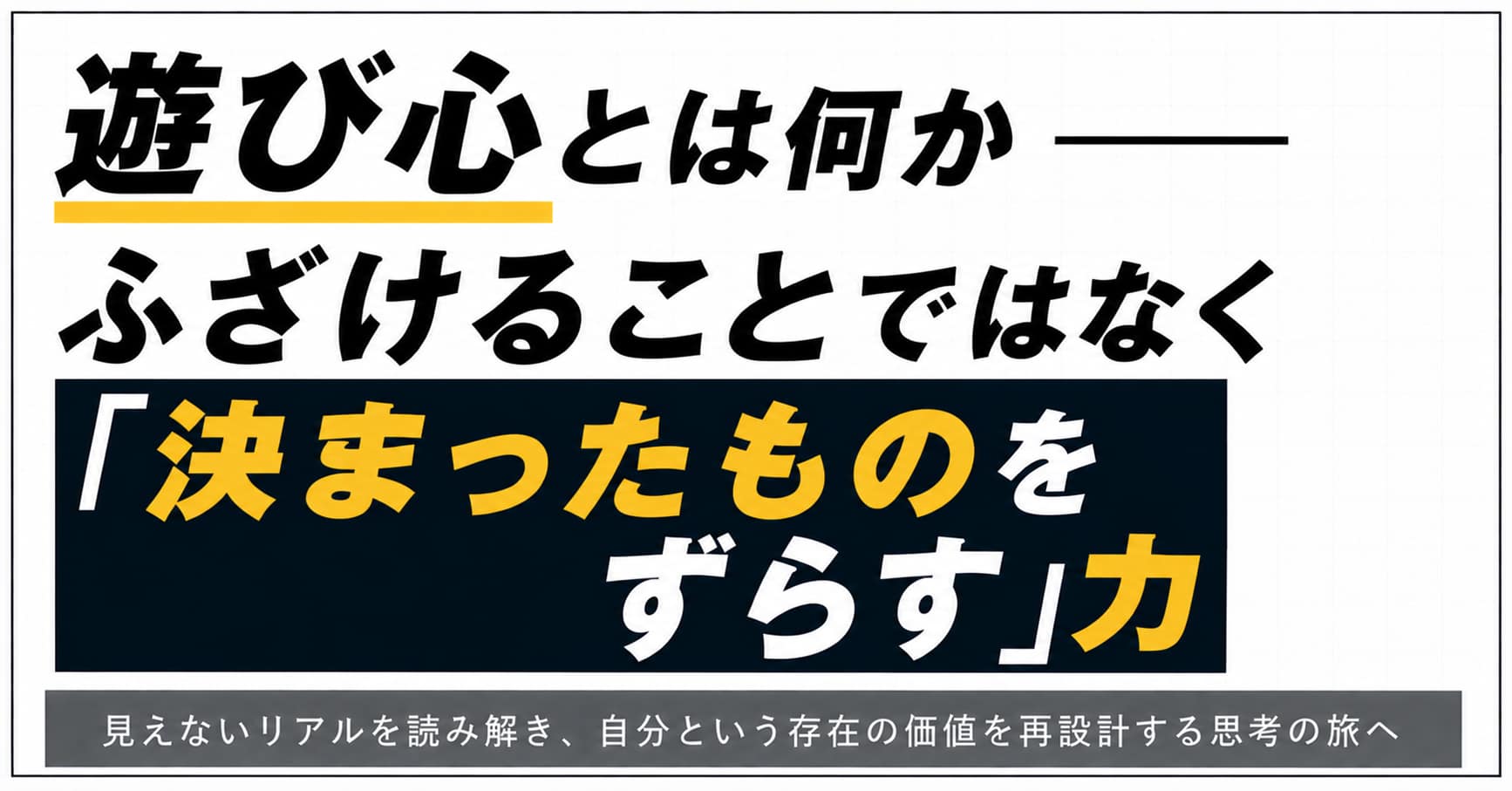
- What is playfulness? It is not about messing around, but the power to "shift the established."
When thinking "I want to increase my value," the first thing many people consider is getting a qualification, polishing their expertise, or increasing skills that are useful right away.
To cut to the chase, that is merely one perspective of the path. Market value is composed of the multiplication of scarcity and the time horizon over which one is evaluated. And ironically, the more you chase "what is useful right now," the more your scarcity is lost.
Talking about "market value" instead of "personal value"
When we talk about one's value, the topic quickly spreads. If it's about the value of being a person, everyone already has it. Value to family, value to friends—if measured by each person's yardstick, there are as many answers as there are people.
I will deliberately not talk about that here. Let us focus solely on "market value" built on the premise of the market—that is, how much easier it becomes to earn money.
Market value is the multiplication of scarcity.
If you list professions considered to have a high market value, the lineup includes executives, investors, entertainers, athletes, doctors, and lawyers. What they all have in common is just one thing: they are things that not just anyone can do.
On the other hand, social value and market value are not the same thing. Things that are truly essential for human beings, such as air and water, are practically free. Essential work crucial to daily life, such as nursing care and childcare, is also difficult to evaluate in terms of market value, contrary to its high level of necessity.
In other words, the more versatile and replaceable something is, the harder it is to calculate its market value. Whether or not one can break through this structural barrier is the turning point in valuation.
Scarcity is not something you are born with, but something you create later.
At this point, one wants to escape into talk of talent and potential. Thinking you want to be someone like Shohei Ohtani doesn't mean you can actually become him.
That's right. There's no point in talking about inborn talent or luck. Other people are other people, and I am myself. That is precisely why I work backward from my goals. Scarcity is not just an innate trait; it is something that can be constructed afterward as a strategy.
As long as you live within the same education, the same culture, and the same framework, scarcity is not created. Most people get a job, acquire a single specialized field, and work hard within it. However, how you combine things that the majority are not doing—that is the only way to create scarcity.
The further the multiplication, the higher the scarcity skyrockets.
Multiplication has distance. An idol transitions to an actress. This is close multiplication. Movement to an adjacent field is predictable to everyone, and in fact, a large number of people follow the same path. Therefore, almost no scarcity is created.
On the other hand, distant combinations—such as an idol aiming to graduate from the University of Tokyo or become a business executive—increase in difficulty the further apart the elements are, but their scarcity also rises sharply. Of course, simply making a distant combination does not guarantee success. Both a sense of judgment and luck are involved in how you choose the combination.
However, creating scarcity itself is actually something anyone can do. The problem ultimately comes down to a matter of design: what elements to combine, and how far apart their domains can be stretched.
The starting point of multiplication is "what you do naturally."
When people talk about distant multiplication, it might seem to require some special experience, but that is not the case. The starting point can be something you have always done normally. Reading manga, playing games, watching sports—everyone has these kinds of things they "just naturally keep doing."
Just reading manga is merely a hobby. However, if you change the perspective and combine it with things like distributing it overseas or editing it for the elderly, it becomes content. Even with the same ingredients, the value changes depending on the angle from which you cook them.
Many people fail to increase their value because they do not reexamine the materials within themselves. The weapons are already at hand. It is simply a matter of how you approach combining them.
What "self" is can only be expressed through external information.
Many people struggle with not knowing their own worth. However, to begin with, one cannot define "who they are" solely from within themselves.
Being a business owner, investing, engaging in these kinds of activities—the contents of a self-introduction are all external information added to oneself afterward. Words that directly point to the essential "self" actually do not exist anywhere.
If so, the answer is simple. You just need to intentionally rewrite the external information attached to you. Unhesitatingly accept the things that move your heart and that you find interesting. There, common sense and the habitual blocking out of things like "how a working adult should be" will be the biggest obstacles.
The criterion for increasing value is "things that are not useful right now"
This will be the most important part. Most people only think about what is useful right now: qualifications, specialized knowledge, and skills that make them immediately ready for work.
However, the moment everyone is thinking the same way, there is no scarcity there.
That is precisely why we invert the criteria for judgment. We dare to choose what is useless right now. This takes courage. It is useless now, and there is no guarantee it will be useful in the future. Even so, what we do within that uncertainty is what separates true value.
Cast the evaluation timeline into the future
Value shows a completely different face depending on "when," "who," and "at what point in time" it is evaluated. Many people think about value on a short time horizon, such as starting today and producing results a month from now.
However, achieving results on a short time horizon is probably something other people can do as well. Truly rare weapons cannot be forged in a year or two. There are realms that can only be reached on a scale of decades.
No one can accurately predict the future. Even when top experts try their best, ninety-nine percent of their predictions are wrong. If that is the case, rather than gambling on predicting the future, it is more rational as a bet to calmly and steadily invest your capital of time into things that are of no use right now.
The utility of uselessness: trees that are of no use are left uncut.
Trees that are just right and easy to use are quickly cut down and used up. Only misshapen trees that are of no use right now are left uncut and eventually grow into large trees.
The more people are praised as "immediately useful," the more they are consumed by those around them at their current value. Conversely, the less people's uses are understood right now, the more they grow over time into irreplaceable beings.
The mindset of constantly chasing short-term profits runs counter to the very history of human evolution, which has progressed by incorporating the time dimension into our thinking. As long as you keep chasing the short-term, you cannot tap into the benefits of that evolution.
There is no set correct answer to the question of increasing one's value. However, whether or not one understands these two structures—that scarcity can be artificially created through multiplication, and that the timeline by which one is evaluated can be cast into the future by one's own will—will lead the same amount of applied passion to completely different destinations.
Stop doing one useful thing right now. That is where the scarcity of ten years from now begins to stir.
↓ YouTube is here ↓
↓Related articles are here↓
↓ Latest posts are here ↓
-

What creates people is the illusion of a "past"—as long as we protect it, the next one won't come.
People are made up of what they have built up through their lives. They must cherish and protect what they have built, rise from failure, and continue to waver between regret and hope...
-
Nothing is greater than your own capacity—no one, no information, no money, everything is determined by the limits of your tolerance.
No good news comes. There are times when I feel that I haven't been lucky. But it's not that I haven't received it; it's just that I haven't been able to receive it...
-

What is playfulness? It is not about messing around, but the power to "shift the established."
Don't be fooled by the idea that "playfulness equals fooling around." First and foremost, playfulness is not just about messing around and being lazy...