
"I can't move because there's something I need to protect." The Lie of Self-Deception Called "Maintaining the Status Quo."
"Because I have a family," "Because I have a job," "Because I don't want to ruin my current situation." People often blame the things they protect for reasons they can't challenge or change.
However, this might be a view that isn't often discussed, but for the most part, "I can't move because I have something to protect" is a lie. To be precise, it's not a total lie, but it's not the real reason.
More often than not, it's just a veneer of moral righteousness coating a self that wants to change but can't.
- When did "what we must protect" become an excuse?
- People who truly protect others don't talk about it much.
- Perhaps what I protect the most is actually what protects me the most.
- The moment fear is translated as "responsibility," people become paralyzed for life.
- What people who use "things to protect" as an excuse are truly afraid of
- The moment that fear is renamed, it disappears from sight—and it will bind you for life.
- If you truly want to protect what you have, you must be the one to act.
- Not changing is not about protecting something – it's just about protecting the present self.
- The age of AI where the importance of momentum is increasing—After the gap in intelligence is eliminated by AI, what remains in the end
- How to turn the benefits of ecosystems destroyed by AI to the side of those who benefit from them—and how to leave the other half behind
- The era in which AI will make individuals the most powerful—the reason we stopped looking for abilities that can't be matched by AI
- Frequently Asked Questions
When did "what we must protect" become an excuse?
People who truly protect others don't talk about it much.
It's a wonderful thing to have something to protect. Family, work, trust, a life built up over time. I have no intention of denying the feeling of cherishing these things.
However, what I observe is that people who truly protect something tend not to talk about it much. They protect it silently. They act if necessary to protect it. They refrain from acting if not acting is better for protection. Their decisions are made with a calm detachment.
On the other hand, people who repeatedly say "I can't move because I have something to protect" are not truly protecting anything. What they're protecting isn't the thing itself, but rather their current state of remaining as they are.
Perhaps what I protect the most is actually what protects me the most.
The moment fear is translated as "responsibility," people become paralyzed for life.
Maintaining the status quo is easy. You won't fail. You won't be embarrassed. Your evaluation won't drop. Your current relationships won't be broken.
That's why people choose to maintain the status quo. That in itself isn't a bad thing. The problem is when we give that choice another name.
"For those I must protect," "For my family," "It's not the right time," "After I'm a little more prepared" – the true meaning behind these words boils down to one thing: the fear of breaking down right now.
If you're scared, it's okay to be scared. But the moment you translate that fear into "responsibility," you turn your back on reality, and you become unable to accurately grasp the current situation. As a result, people become unable to act. They no longer feel the need to act.
For some people, it might not be fear, but a "weakness" that truly wants to be "protected." However, by projecting that weakness onto a sense of responsibility, a pseudo-strong self is created. The distorted world that this ego observes is founded upon a beautiful yet fleeting fictional foundation.
This is the true structure of maintaining the status quo through self-deception.
What people who use "things to protect" as an excuse are truly afraid of
The moment that fear is renamed, it disappears from sight—and it will bind you for life.
I want to change but I can't. I want to challenge myself but I can't take the first step.
What such people truly fear is not failure, not their family's hardship, and not a decrease in income.
My current definition is that it's about breaking down.
People fear most the cracking of their current professional title, relationships, reputation, and self-image as "this kind of person." And because it's painful to face that fear directly, they reframe it as "protecting what they have." The moment they rename it, the fear becomes invisible. The invisible fear will continue to bind that person for life.
The terrifying aspect of self-deception is the lack of awareness that one is lying to oneself.
If you truly want to protect what you have, you must be the one to act.
Not changing is not about protecting something – it's just about protecting the present self.
Many of you may have felt pained reading this far. There's no point in saying comforting things, so just one last thing.
If you truly want to protect what you hold dear, you must first face your emotions and accurately recognize their origins, rather than turn away from them. In some cases, it might be best to act immediately, while in others, you may need to reconfirm your resolve to stand firm.
Regardless, the time a person can remain unchanged is not as long as they think.
The universe, the world, the environment, the economy, our bodies, and our relationships all move on their own. Some people might feel like they are being left behind in a moving world, with only themselves standing still.
If you remove the phrase "for the sake of what I protect" from your thoughts, what remains is a fear that makes you tremble. Naked vulnerability. That's the real reason you couldn't move. Perhaps it's good to begin with the challenge of confronting that first.
For those who want to break free from maintaining the status quo, check out "θ Corridor III" now.
↓ Those who read the article on self-deception also recommend the following article ↓
↓ Latest articles are here ↓
-
The age of AI where the importance of momentum is increasing—After the gap in intelligence is eliminated by AI, what remains in the end
This article examines what makes the difference in the AI era. In conclusion, it is said that "the part of the brain that is responsible for thinking and creating ideas..."
-
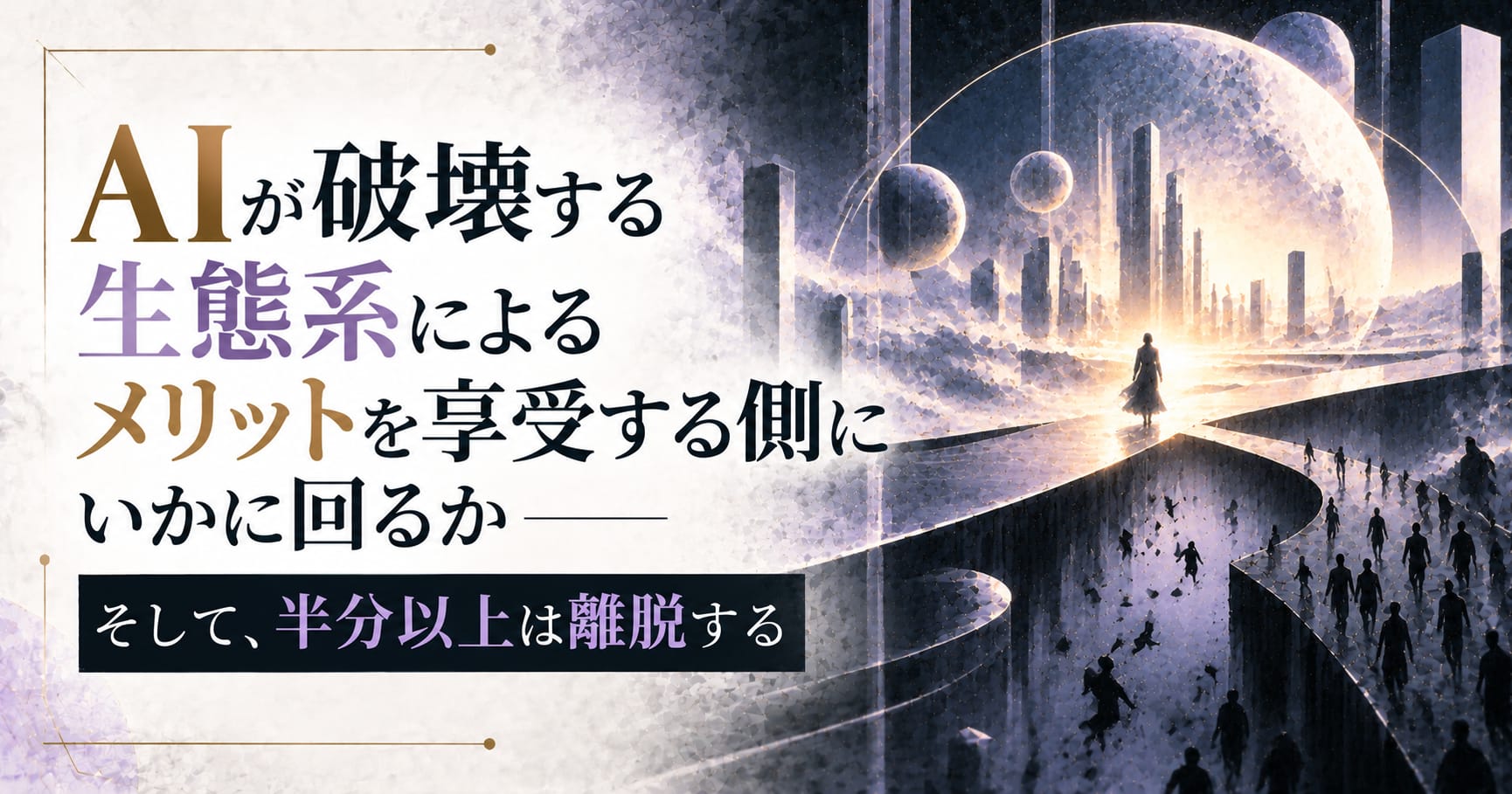
How to turn the benefits of ecosystems destroyed by AI to the side of those who benefit from them—and how to leave the other half behind
It is believed that businesses should start with what they want to do. However, the advent of AI is bringing a new wave to that. Sales…
-
The era in which AI will make individuals the most powerful—the reason we stopped looking for abilities that can't be matched by AI
Creating apps that only you use every day—replacing search or updating a handy tool for when you’re stuck—in an instant, now with AI…
Frequently Asked Questions
Often, it’s not a real reason at all; it’s a self-deception in which one replaces the fear of being broken with the “sense of responsibility.”
The reason is that avoiding failure, shame, and a lower rating is easy. The problem is that we end up giving that choice another name.
If necessary, you need to turn to the side that is moving slowly. What does not change is not guarding.


